Abstract
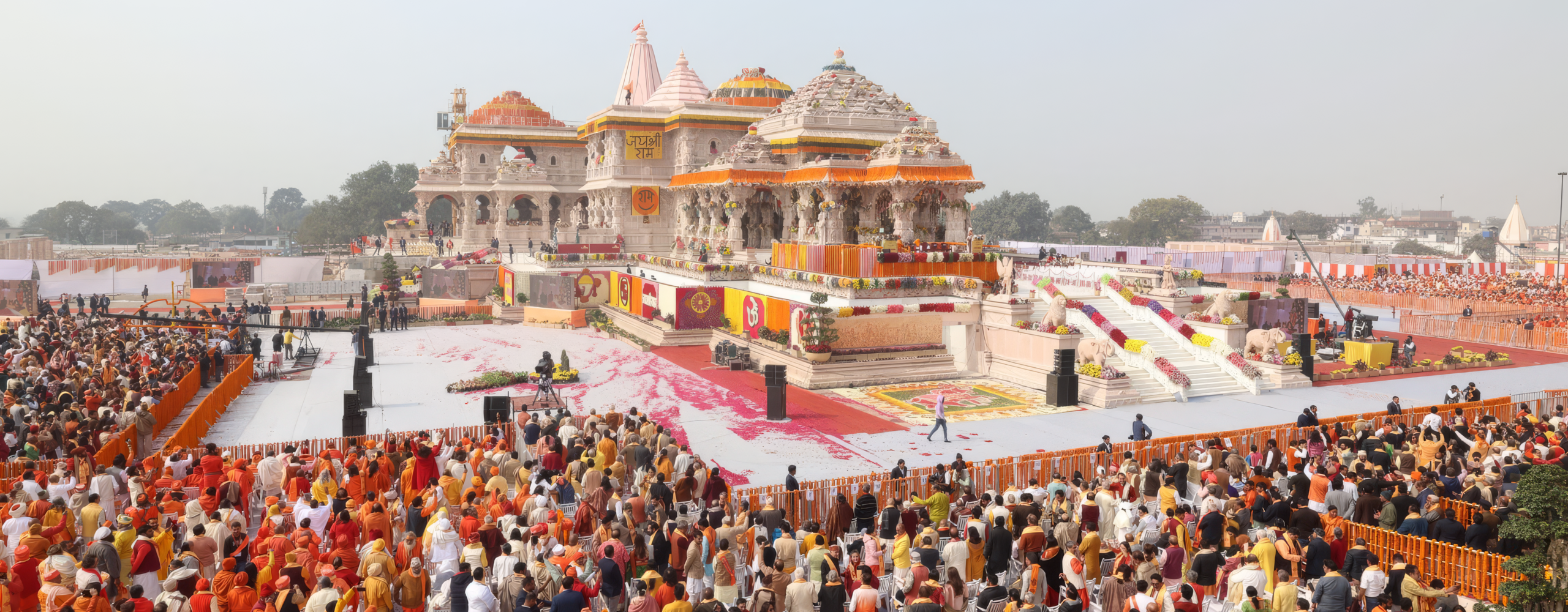
On 22 January 2024, millions of people across India and around the world witnessed the historic Pranpratishtha (consecration) of Shri Ram Lalla at the newly constructed Shri Ram Janmabhoomi Mandir (temple) in Ayodhya. For many Indians, the event marked the culmination of a centuries-long aspiration to restore a temple at what is traditionally revered as Shri Ram’s birthplace. Maharshi Adhyatma Vishwavidyalay (MAV) conducted a spiritual research study to investigate whether this landmark event produced measurable changes in the subtle environment and in the individuals participating in the ceremony.
The research consisted of two complementary studies:
1. A study of Google’s historical satellite imagery of the Shri Ram Janmabhoomi Mandir site using the Universal Aura Scanner (UAS) to assess changes in subtle vibrations in the site around the temple over time.
2. A study of participants watching the Pranpratishtha ceremony live telecast, measuring changes in their aura before and after the event.
The findings suggest a progressive increase in positive subtle vibrations around the Shri Ram Janmabhoomi Mandir site leading up to the Pranpratishtha, along with significant reductions in negative vibrations among participants who watched the ceremony’s live telecast. These observations provide a unique perspective on the spiritual effects of one of the most significant spiritual events in contemporary Bharat.
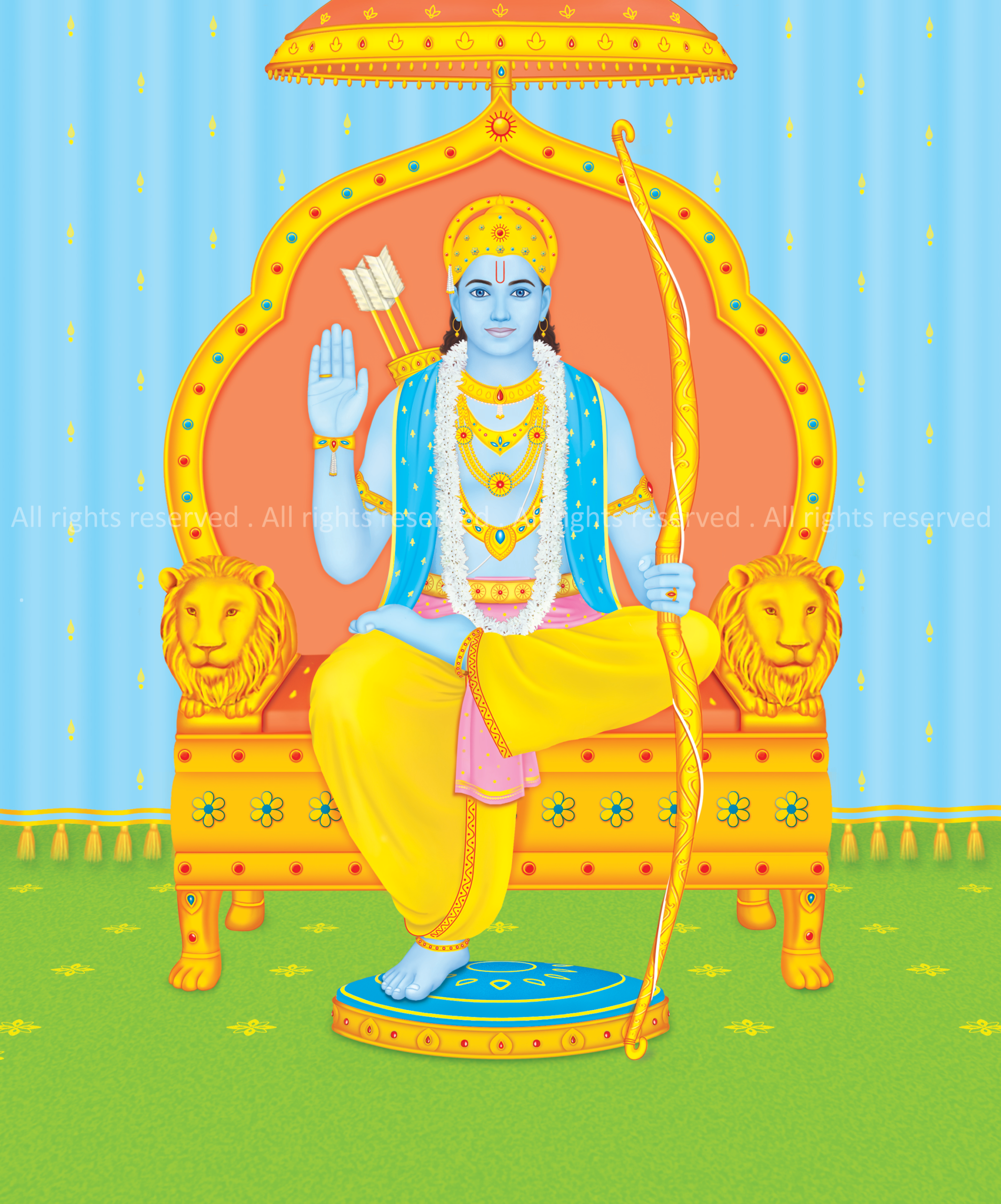
For thousands of years, Shri Ram has held a unique place in the hearts of Indians. Revered as the seventh incarnation of Shri Vishnu, Shri Ram is celebrated not merely as a king or a heroic figure, but as the embodiment of Righteousness (Dharma), duty, sacrifice, compassion, courage and ideal governance.
The Ramayana presents Shri Ram as Maryada Purushottam—the Supreme Ideal Person—whose life demonstrated how Dharma should be upheld in every situation. Shri Ram is the exemplar of righteousness— an ideal son, brother, husband, friend, and king. He was neither elated by the news of His coronation nor distressed by His exile. The Bhagavad Gita describes such equanimity as the mark of a person of steady wisdom (Stithapradnya). His qualities include :
As described in spiritual literature (Ref), Shri Ram serves as an ideal for both individual conduct and societal organisation. His reign, popularly remembered as Ram Rajya, is regarded as a model of justice, prosperity, harmony and spiritual values. His ideals are more relevant today than ever, as they can guide how national leaders should think and act.
Nearly Five Centuries of Resolve: The Ram Janmabhoomi Movement
The establishment of the Shri Ram Mandir at Ayodhya in 2024 represents, by any measure, one of the longest-running struggles in recorded history to restore a sacred site —spanning approximately 496 years, from the construction of the Babri Masjid in 1528 to the Pranpratishtha of Shri Ram Lalla on 22 January 2024. Hindu tradition reveres Ayodhya as the birthplace (Janmabhoomi) of Shri Ram.
What follows is a brief timeline of the central milestones in this long struggle—presented not as political commentary, but as the factual backdrop without which the significance of the 2024 Pranpratishtha of Shri Ram Lalla ceremony cannot be fully appreciated.
The Babri Masjid structure was recorded as having been built on a site Hindus revere as the birthplace (Janmabhoomi) of Shri Ram.
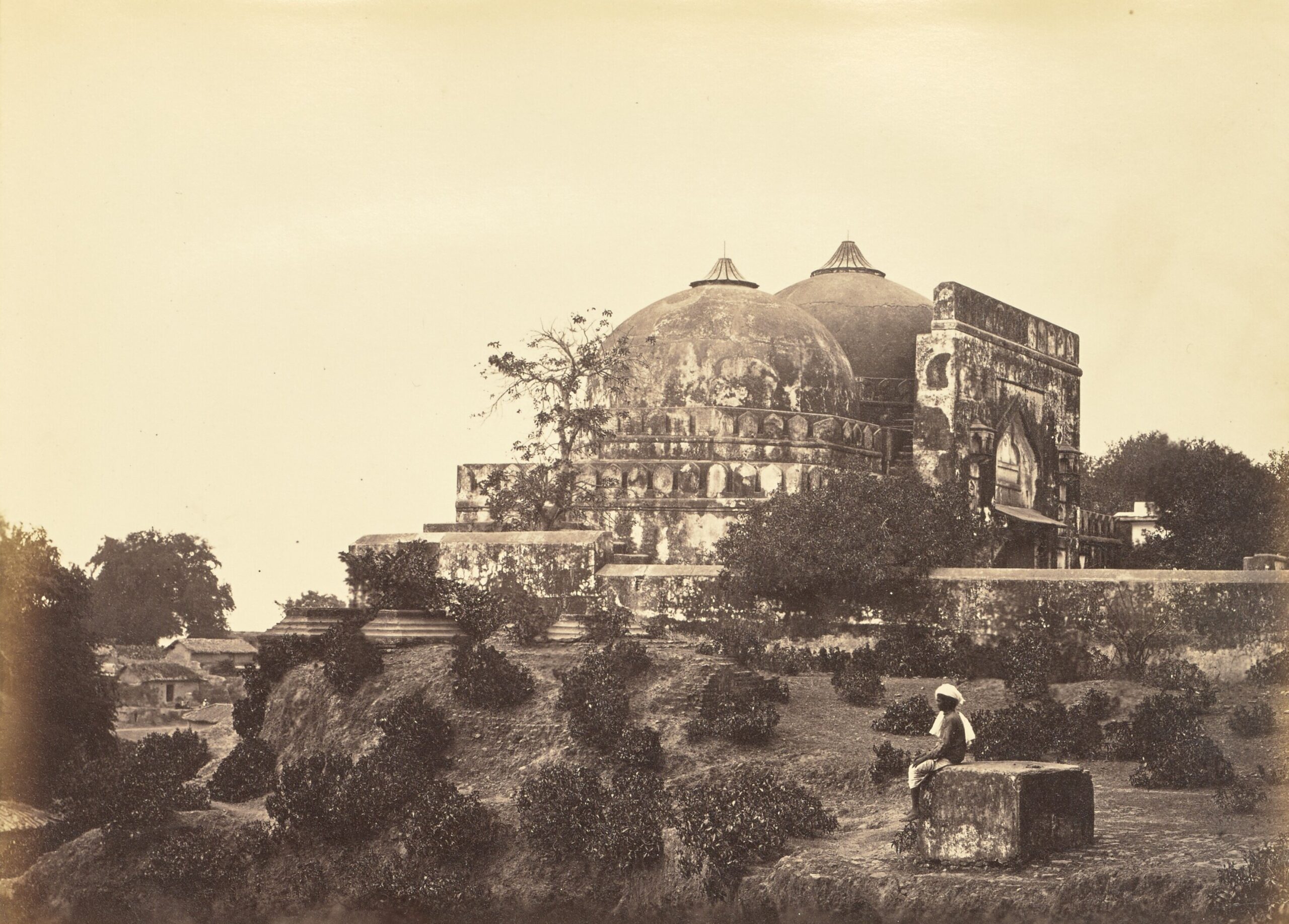
Early documented disputes and legal proceedings.
Idols of Ram Lalla were found inside the disputed structure’s central dome. The government subsequently took the site under administration, and it became the subject of legal proceedings.
The court ordered the opening of the disputed site’s locks, allowing devotees broader access for worship.
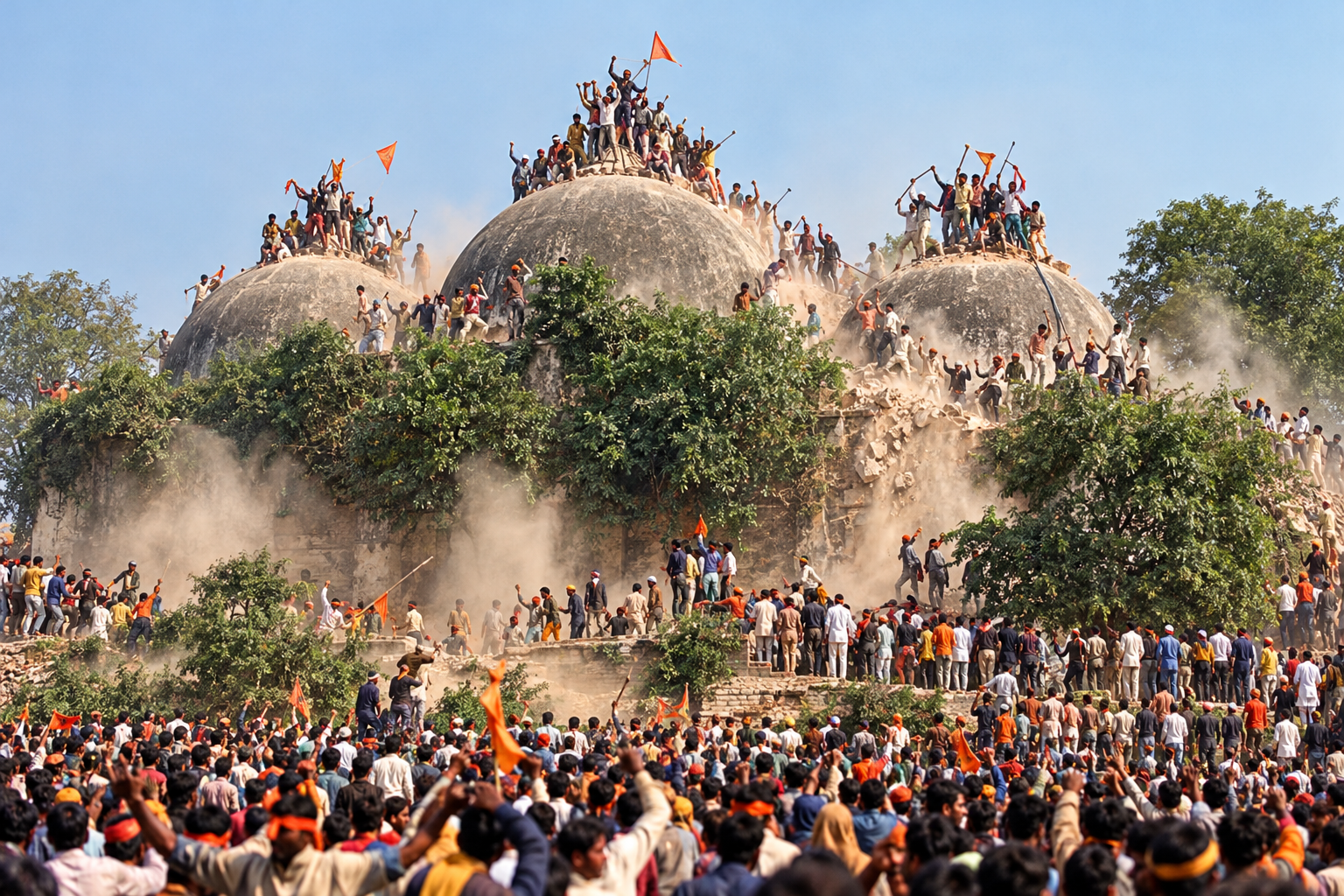
Demolition of the Babri Masjid structure.
Supreme Court verdict awarding the disputed land for the Shri Ram Janmabhoomi Mandir (temple) construction
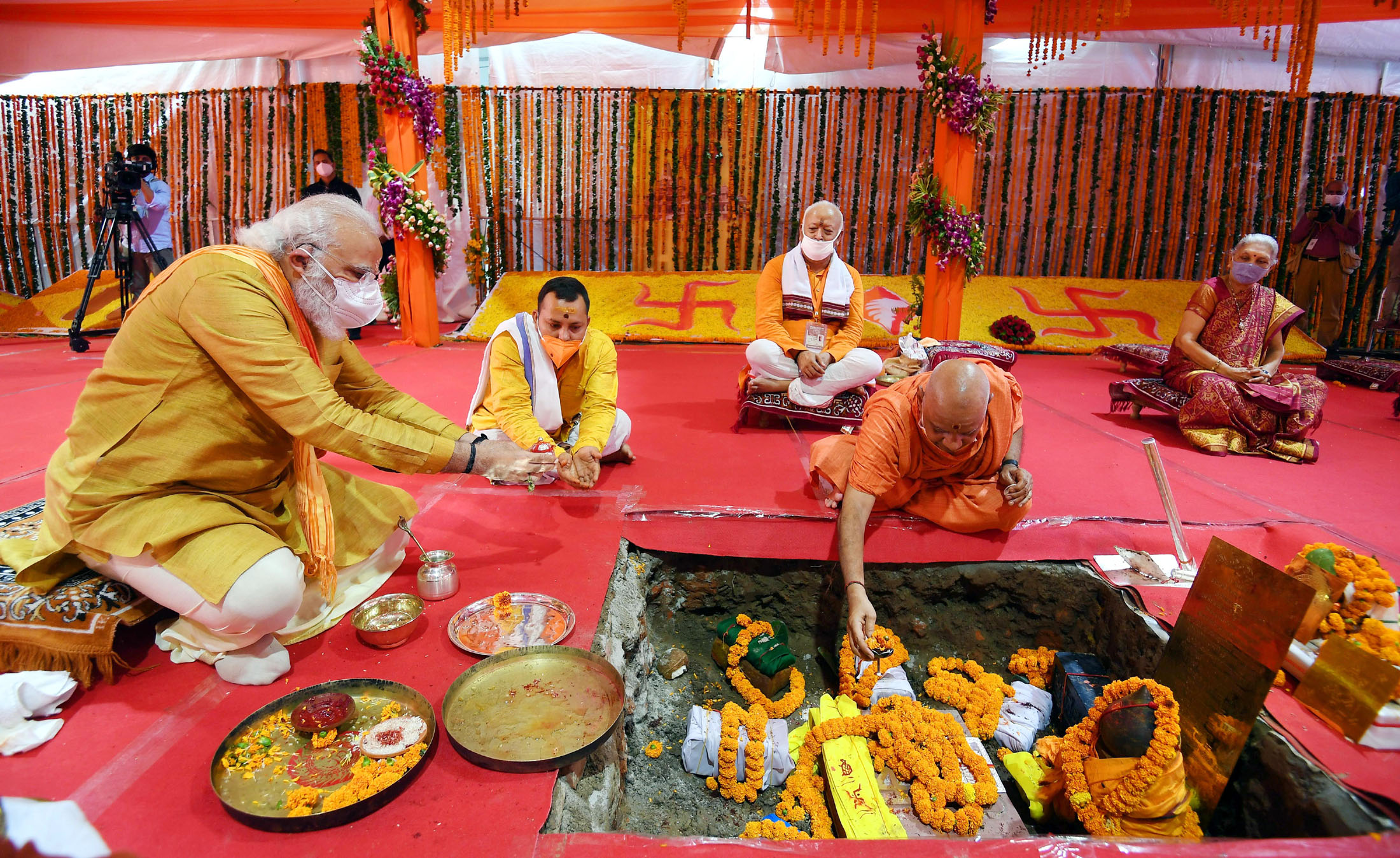
Bhoomi Pujan ceremony of the Shri Ram Janmabhoomi Mandir (temple)
The Pranpratishtha (consecration) of Shri Ram Lalla was performed at the newly constructed Shri Ram Janmabhoomi Mandir in Ayodhya. Prime Minister Shri Narendra Modiji participated as the principal Yajman (the primary patron of a religious ritual), while millions of devotees across India and around the world joined the ceremony through live broadcasts and local celebrations.
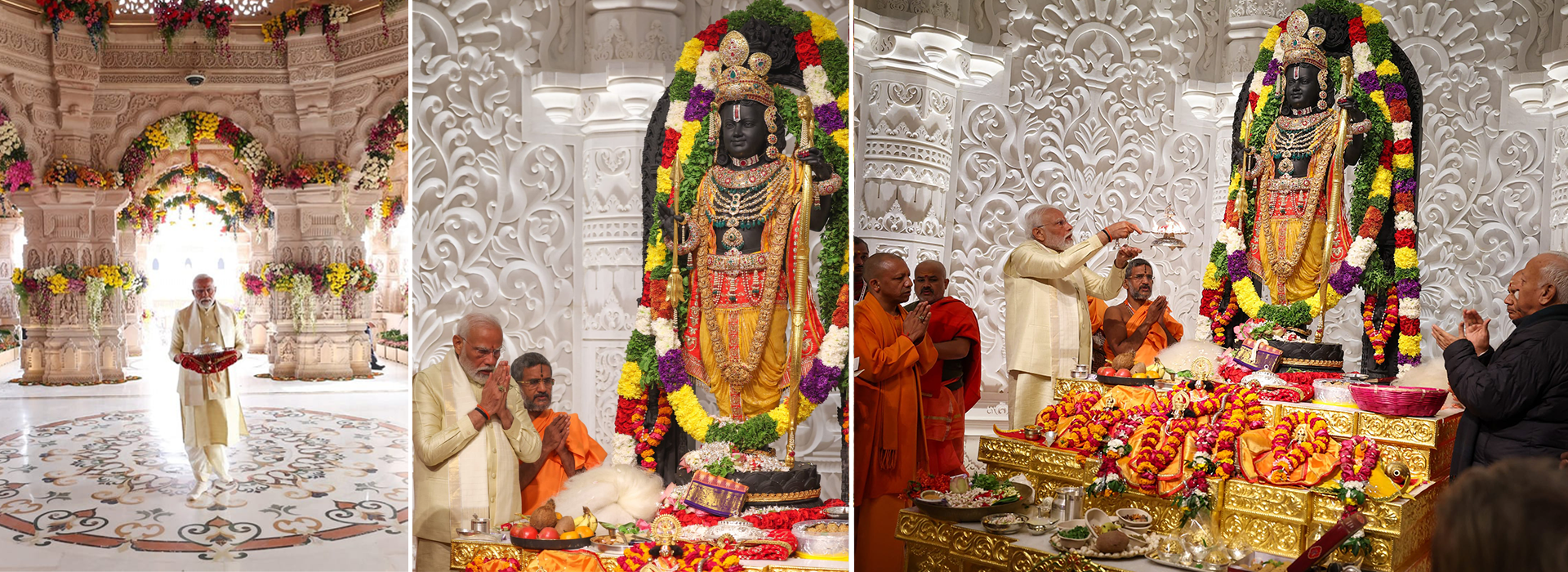
Expansion of the temple and pilgrimage infrastructure continues
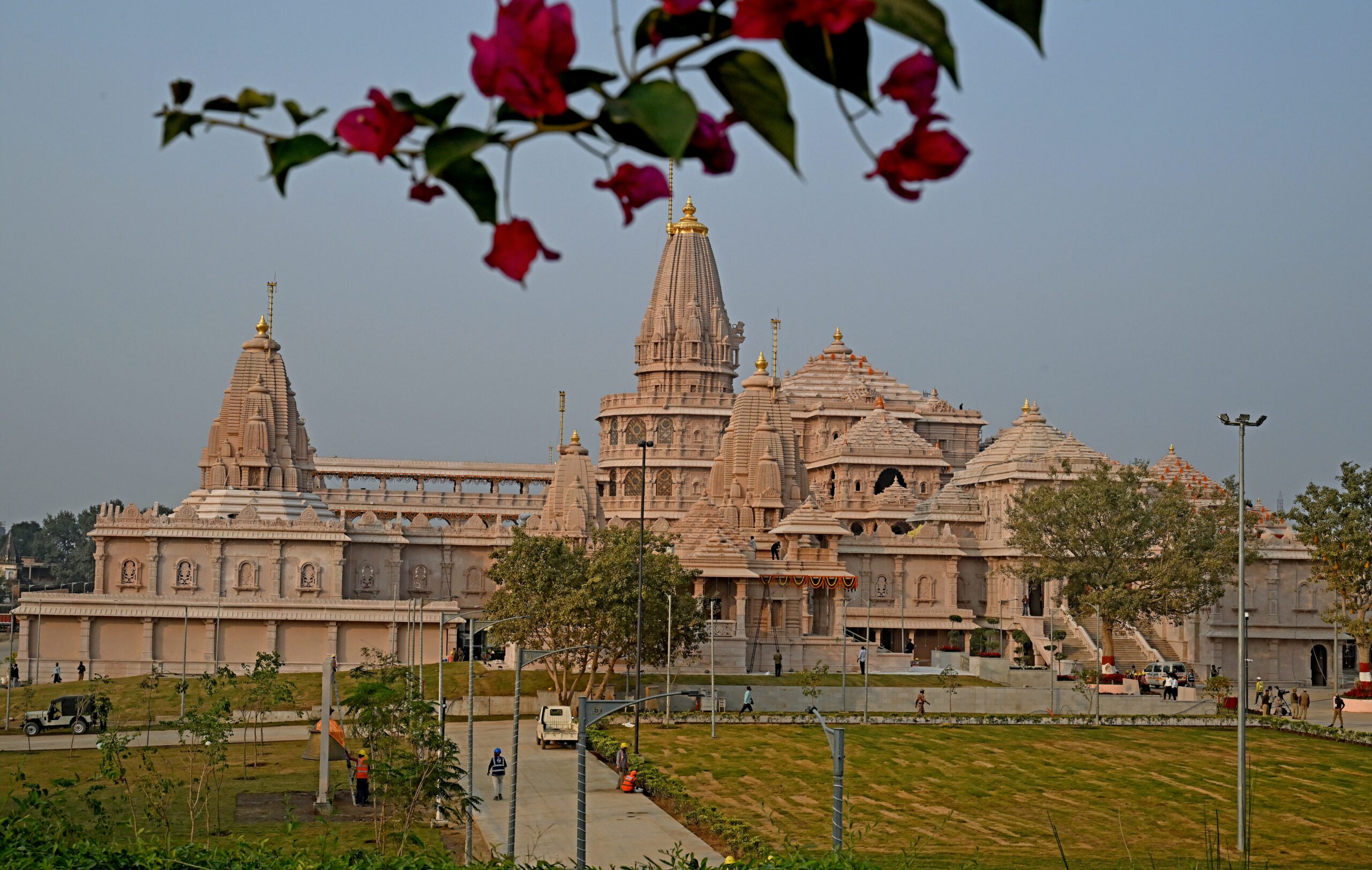
While perspectives on various historical events differ, many agree that the temple’s completion represents one of the most significant religious and cultural developments in modern India.
The Pranpratishtha of the Shri Ram Lalla Idol galvanised all of India. In the days leading up to the Pranpratishtha, Indians around the world felt joy, inner peace, and increased devotion. A sense of witnessing a historic and sacred moment prevailed.
Maharshi Adhyatma Vishwavidyalay sought to investigate the subtle impact of the Pranpratishtha of the Shri Ram Lalla Idol on people and the environment.
To do this, researchers at MAV used the following modalities:
This study was planned in two parts.
Part 1 –
Using Aura and Energy Scanners, we analysed historical satellite images of the area surrounding Shri Ram Mandir to study changes in its subtle vibrations over the years and its potential impact on the environment.
Part 2 –
How Watching the Pranpratishtha Affected Participants: We invited Indian and international participants to watch the livestream of Shri Ram Lalla’s Pranpratishtha ceremony and measured their auras before and during the event.
The Maharshi Adhyatma Vishwavidyalay (MAV) uses the Universal Aura Scanner (UAS)—a patented device developed by Dr Mannem Murthy, a former nuclear scientist—to measure subtle spiritual energy in a quantifiable, reproducible way. Over 12 years of using this instrument (2014–2026), our research team has conducted more than 15,000 readings with this instrument, establishing a reliable baseline for interpreting results.
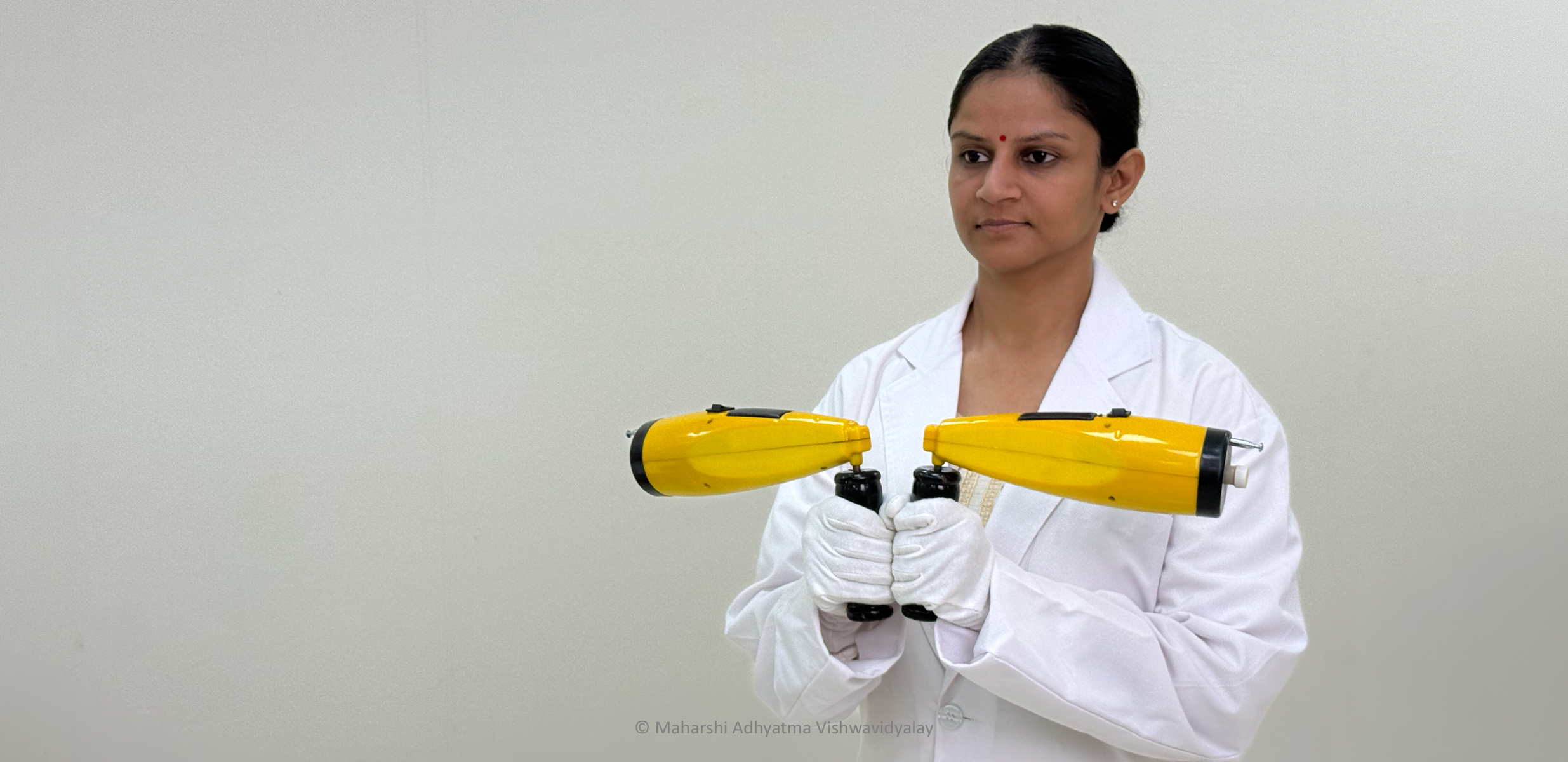
The Universal Aura Scanner is an instrument used in MAV spiritual research to assess subtle vibrations associated with people, places and objects. It measures the type of subtle energy (whether positive or negative) and the aura around any object (living or non-living). The following parameters and their meanings are given below.
| Parameter | Meaning |
|---|---|
| IR (Infrared) | Negative vibrations |
| UV (Ultraviolet) | Positive vibrations |
| PA (Positive Aura) | Extent of positive aura around the object or person |
| Measured Aura | The overall energy field of the object or person |
Results were cross-verified using the advanced sixth sense ability of trained seekers within the MAV research team.
We downloaded historical satellite images (at an altitude of approximately 750 meters) of the Ayodhya temple site from Google Earth using the Historical Imagery feature.
The satellite images were obtained from the following months:
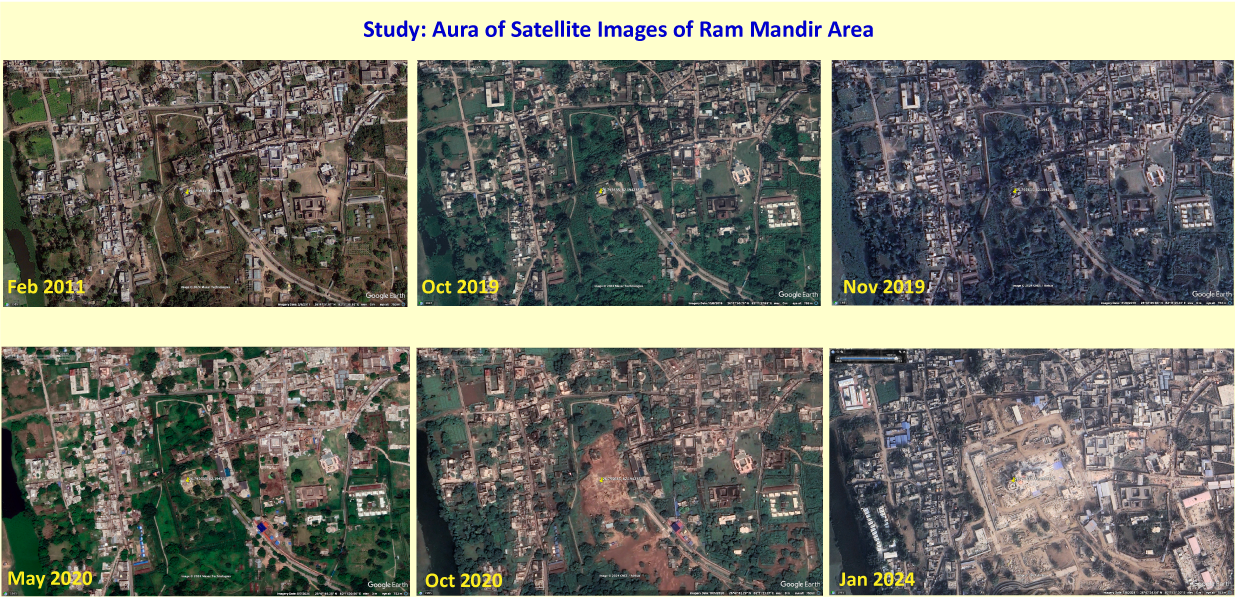
The satellite imagery was analysed using the Universal Aura Scanner.
The images were initially studied at an altitude of approximately 750 metres, enabling researchers to assess the broader subtle environment around the temple site.
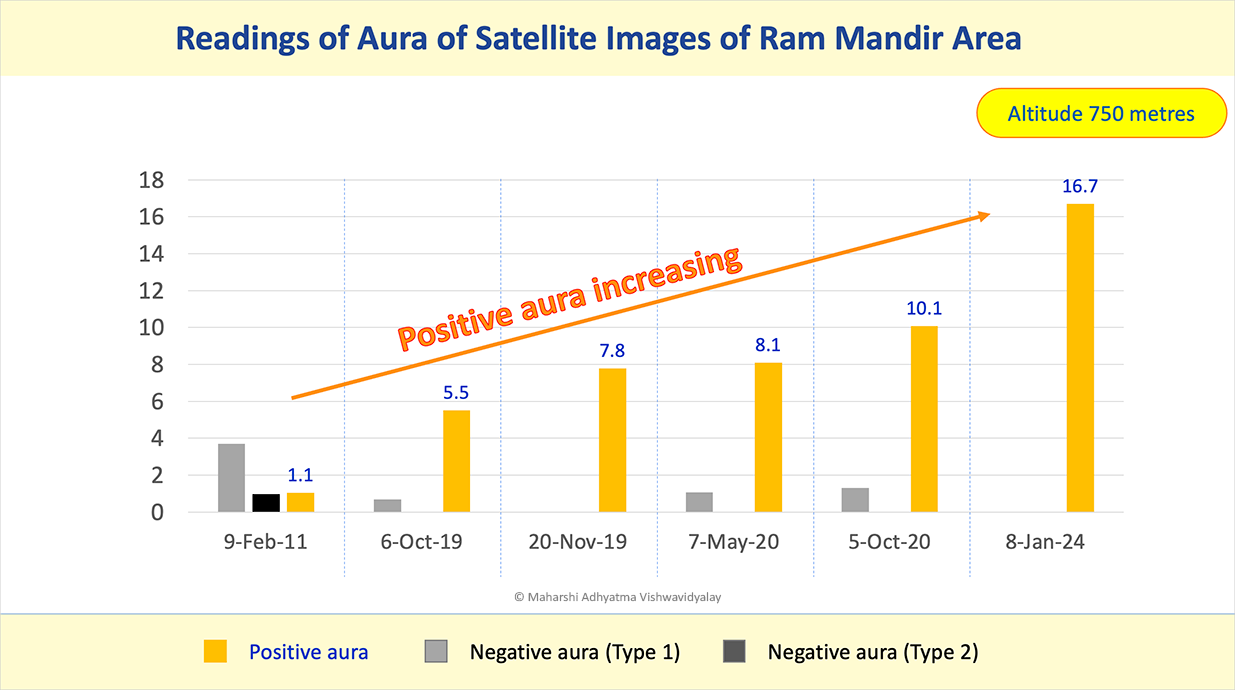
The data reveals a clear and sustained upward trajectory in the positive aura (PA) of the Ram Janmabhoomi site over the thirteen-year period examined. In February 2011 — the earliest image in the study — the site registered modest positivity (PA: 1.05 m) alongside measurable negative IR and UV readings.
A marked shift occurred in the period surrounding the Supreme Court verdict of November 2019. Between October and November 2019, the positive aura increased from 5.51 m to 7.79 m, while negative IR and UV readings dropped to zero after the verdict — suggesting that the legal resolution and growing national devotional momentum had a measurable purifying effect on the subtle environment of the site.
Through 2020, as the land was being prepared and construction of the Shri Ram Mandir commenced, the positive aura continued to grow steadily. According to spiritual research, whenever events of greater magnitude occur (for the benefit of humankind), negative energies from the subtle dimension try to create obstacles. This helps explain a contributing factor of the negativity detected in the satellite images’ aura in 2020.
By 8 January 2024 — just days before the Pranpratishtha — the site registered a positive aura (PA) reading of 16.7 m, representing more than a 1500% increase relative to 2011. More importantly, the January 2024 images showed no negative IR or UV readings. This indicates that the spiritual positivity had entirely displaced the subtle negative energy. The increase in positivity and the absence of negativity in the aura show that the Shri Ram Temple was attracting the Deity Shri Ram Principle and spreading it into the environment.
When we analysed a satellite image taken at a lower altitude of 230 metres, the positive aura increased to 22 metres, suggesting that the positive vibrations were concentrated around the Shri Ram Janmabhoomi Mandir (temple) site in Ayodhya.

The findings suggest that the spiritual significance of the Shri Ram Janmabhoomi Mandir (temple) in Ayodhya, along with ongoing construction and consecration activities, progressively increased positive subtle vibrations in the surrounding environment.
From a spiritual perspective, sacred spaces are believed to accumulate and radiate positive energy through:
The progressive rise in positive aura observed in the satellite imagery is a testimony to all the above factors coming together at the Shri Ram Janmabhoomi Mandir (temple) in Ayodhya.
The second part of our research focused on the human dimension: what happens to a person’s aura when they watch the Pranpratishtha ceremony with devotion? To answer this question, MAV researchers measured eleven participants with the UAS instrument. The group included both Indian and international seekers, and they were measured before and after the ceremony on 22 January 2024.
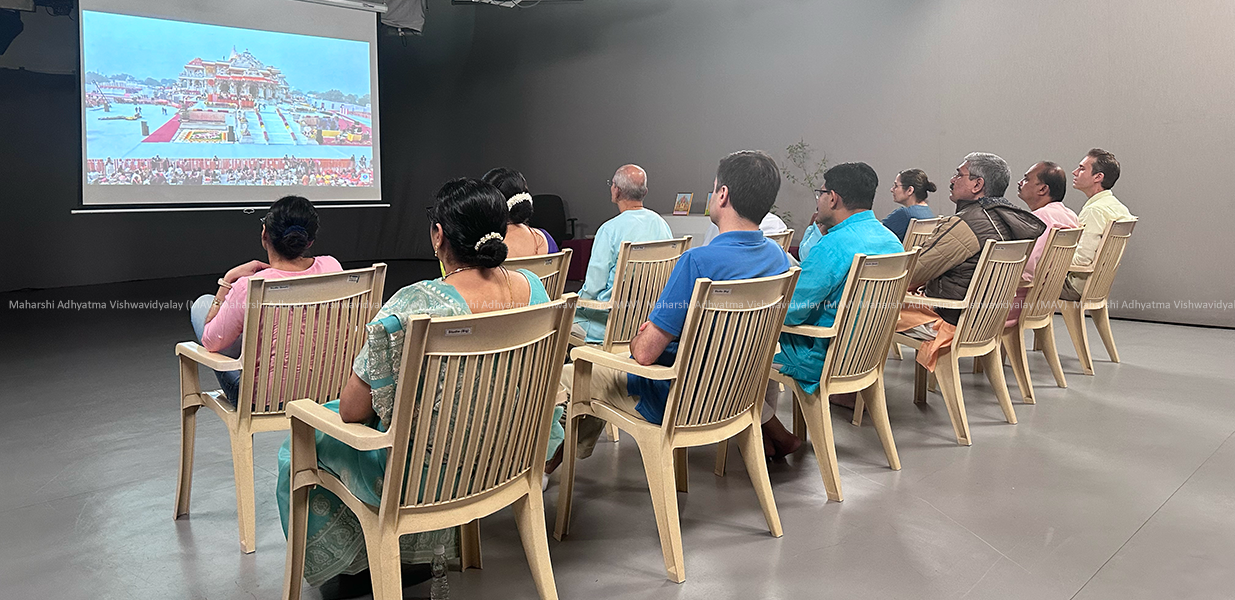
Eleven participants from diverse national and cultural backgrounds were assembled to watch the Pranpratishtha ceremony via live broadcast. UAS readings were taken of each participant just before the ceremony commenced. A second set of readings was taken just after the actual Pranpratishtha — the moment of the sthapana (installation) of the Ram Lalla Idol — when participants were in a deep state of spiritual emotion (bhav).
Researchers measured:
Reduction in Negative Vibrations
Increase in Positive Vibrations

Analysis and Interpretation
The results across ten of the eleven participants are consistent and striking.
Note to our readers: In current times, due to increased spiritual impurity in the environment and the nature of the times we live in (Kaliyug), having a positive aura is more the exception than the norm. Even seekers are affected by the environment, and therefore, while they have positivity generated due to their spiritual practice, they also have some level of negativity in their aura.
An Exceptional Observation
A seeker from Europe (from the 11 participants) showed a markedly different pattern: his negative IR reading increased from 17.30 m to 50.00 m — a rise of 189% — during the Pranpratishtha ceremony, while his UV reading rose from 11.01 m to 37.00 m. He did not register any positive aura either before or during the ceremony.
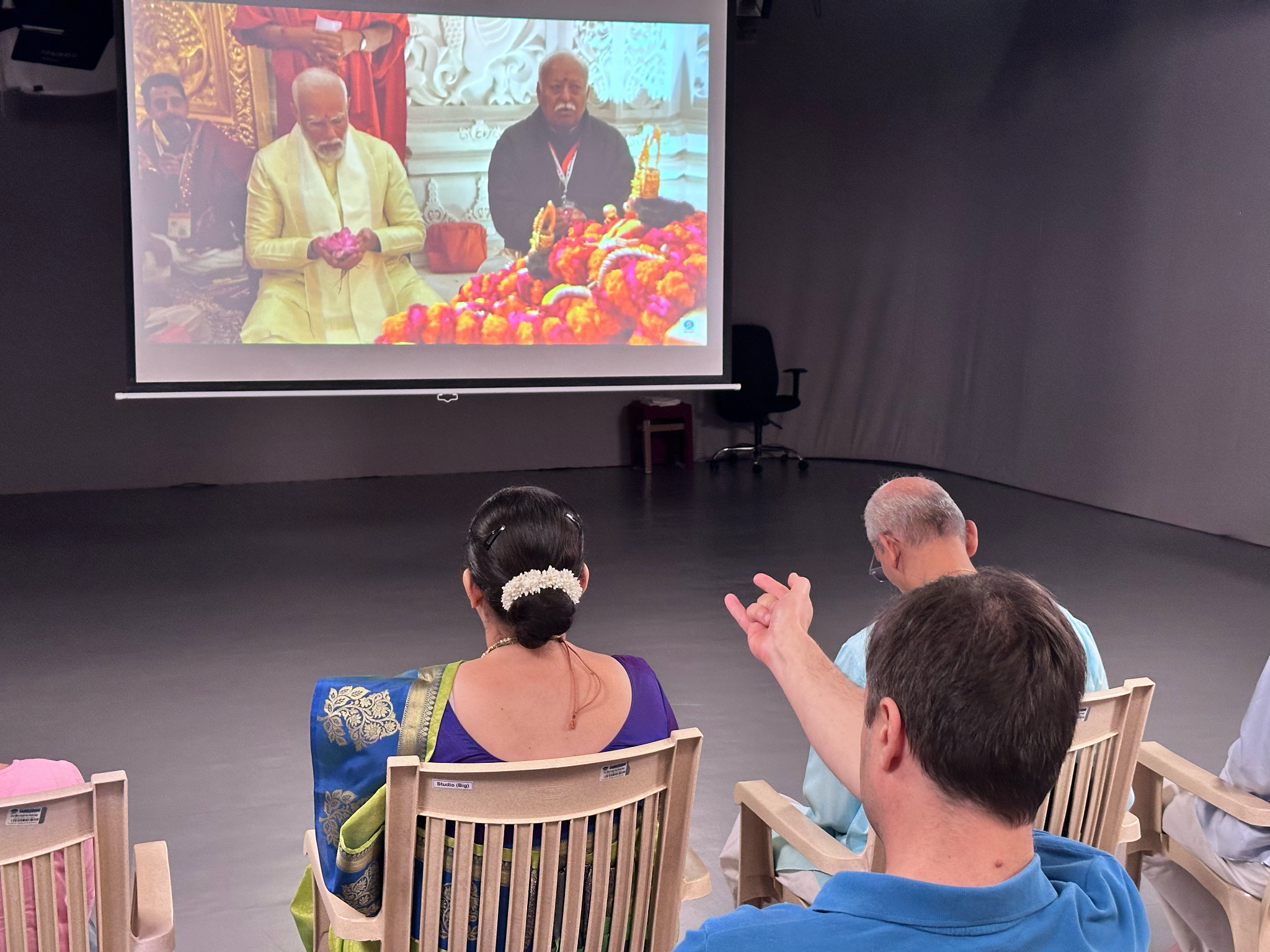
Using their sixth sense, the MAV research team perceived that this seeker was experiencing a manifestation of a negative entity (also known as demonic possession). The intense positive spiritual energy generated by the Pranpratishtha ceremony agitated the negative entity, causing it to become more active and its UAS readings to spike negatively. The participant’s hands became visibly red due to the subtle battle that ensued between the positivity generated from the ceremony and the negative entity possessing him. This kind of negative entity manifestation is usually triggered by an overwhelming surge of spiritual positivity. Such phenomena have been documented in MAV’s wider research on negative energies and are consistent with the known behaviour of distressing entities when confronted with high positive (sattvik) environments. We therefore treat this seeker’s readings as an aberration, a separate data point, and exclude them from the average IR reduction calculation.
Spiritual Interpretation of the Findings
The results of both research studies point toward a common observation:
From a spiritual perspective, these findings support the understanding that spiritually significant events such as the Pranpratishtha (consecration) of Shri Ram Lalla at the newly constructed Shri Ram Janmabhoomi Mandir (temple) in Ayodhya can positively influence both individuals and the surrounding environment significantly.
While instruments like the UAS are great spiritual research tools, a true measure and analysis of subtle vibrations can only be done through the sixth sense, which must be at a very advanced level. Our spiritual research team includes seekers who can perceive the vibrations and aura emitted by people and objects. By drawing them, they serve as spiritual X-rays, providing clarity on the true nature of a phenomenon or event at a vibrational level, such as the Pranpratishtha (consecration) of Shri Ram Lalla.
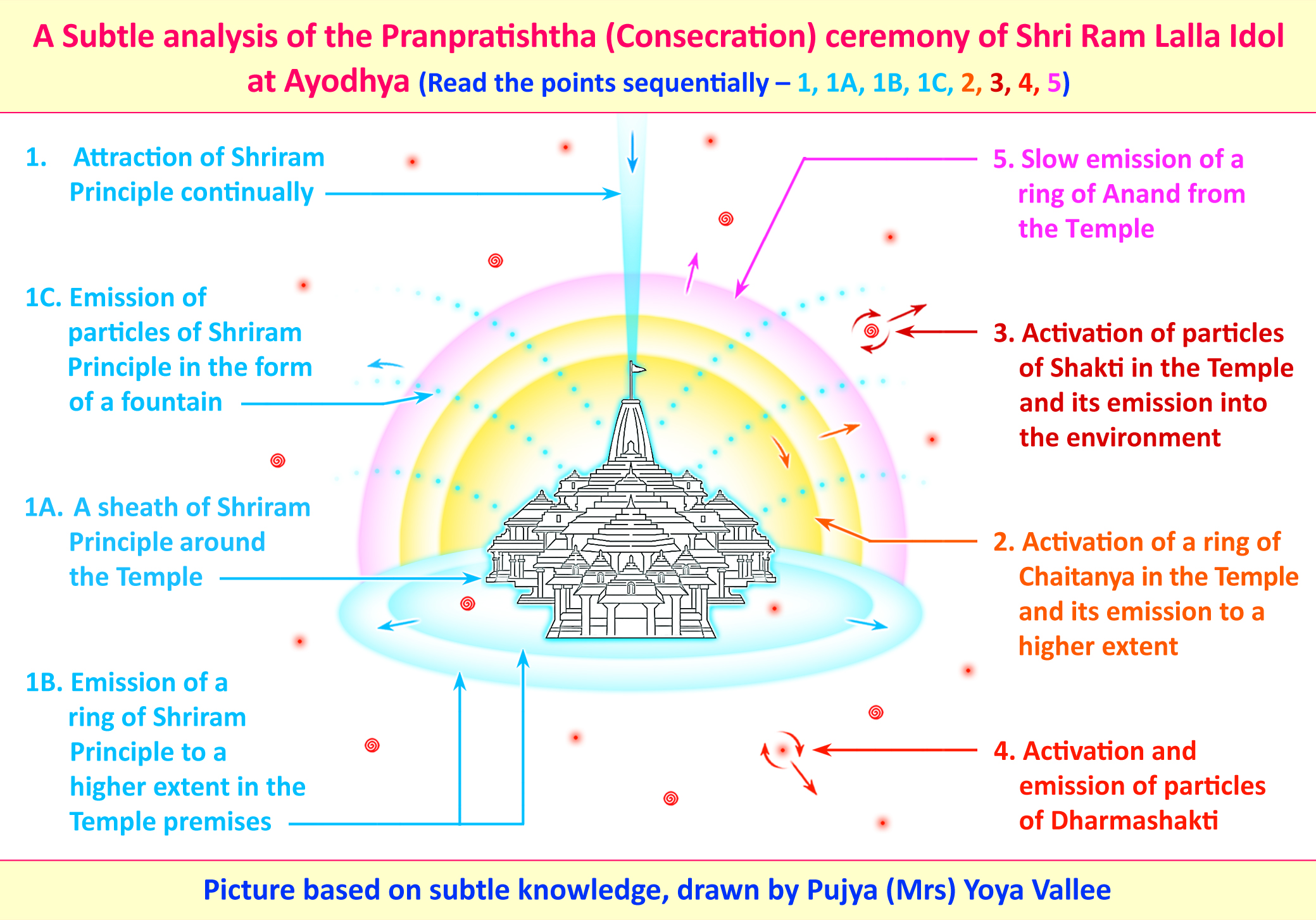
Her Holiness Yoya Vallee, a Saint with an advanced level of sixth sense, drew the subtle picture below. As the Pranpratishtha of Shri Ram Lalla was happening, a higher level of positive vibrations was attracted and emitted into the environment. Read the points sequentially, as this is the order in which she saw the Divine positive vibrations being attracted towards the temple and emitted into the environment, thus energising everyone in the vicinity.
Our founder, Sachchidananda Parabrahman Dr Jayant Balaji Athavale, was invited to this historic event in recognition of His tireless efforts to propagate Spirituality and uphold Dharma (Righteousness). Representing Him, His successors, Shrisatshakti (Mrs) Binda Nilesh Singbal and Shri Chitshakti (Mrs) Anjali Gadgil, attended the ceremony.
During their visit, they experienced and contributed to the event on a spiritual level, visited temples, and met with other spiritual leaders and Saints working toward society’s spiritual upliftment. They also visited the sacred Saryu River to experience the Shri Ram Principle. Here are some glimpses of their experiences during this historic occasion.
Ram Rajya: The Ideal Still Guides Us
The Pranpratishtha of Shri Ram Lalla at Ayodhya on 22 January 2024 was, in every dimension — historical, cultural, legal, devotional and now spiritual-scientific — a moment of extraordinary consequence. What began as a struggle in 1528 AD reached its fruition after 496 years: not through force or accident, but through the unbroken resolve of generations of devotees who believed that the reinstallation of Shri Ram in His birthplace was not merely a religious ambition but a spiritual imperative.
The research presented here cannot speak to the full mystery of what occurred at Ayodhya that January morning. But it can offer a glimpse — through the UAS readings and the sixth sense readings of evolved seekers — of the extraordinary energetic transformation that accompanied the event. An environment purified over years of collective devotion. Auras of observers cleansed and brightened simply by watching the livestream of the ceremony.
Maharshi Adhyatma Vishwavidyalay’s research offers an unusual, thought-provoking perspective on this event. Through analyses of historical satellite imagery and aura measurements of participants, the study observed:
While further research is planned, the findings contribute to MAV’s broader efforts to explore the relationship between Spirituality, consciousness, and the environment.



Maharshi Adhyatma Vishwavidyalay (MAV) conducted research to study the subtle spiritual impact of the Pranpratishtha ceremony held on 22 January 2024 at the Shri Ram Janmabhoomi Mandir in Ayodhya. The research examined changes in subtle vibrations around the temple site using historical satellite images and measured aura changes in participants watching the ceremony live.
MAV conducted two studies using the Universal Aura Scanner (UAS). First, researchers analysed historical Google Earth satellite images of the temple site from 2011 to January 2024. Second, they measured the auras of 11 Indian and international participants before and during the Pranpratishtha ceremony to observe changes in negative vibrations and positive aura.
According to MAV’s UAS readings, the positive aura of the satellite pictures of the site increased from 1.05 metres in February 2011 to 16.70 metres in January 2024. The January 2024 image showed no detectable negative IR or UV readings. A supplementary reading from a satellite image taken at a lower altitude of 230 metres recorded a positive aura of 22.35 metres.
According to MAV’s measurements, 10 of the 11 participants showed reduced negative vibrations during the ceremony, with an average reduction of about 60%. The study also recorded an average increase of approximately 145% in positive aura among participants. One participant showed an atypical increase in negative readings and was excluded from the average reduction calculation.
Shri Ram is revered as Maryada Purushottam, the ideal person who embodies Dharma (Righteousness), truth, duty, compassion and ideal governance. For many Hindus, the Pranpratishtha on 22 January 2024 marked the culmination of a centuries-long aspiration associated with Shri Ram Janmabhoomi. From MAV’s spiritual perspective, the research findings suggest that such a spiritually significant event may positively influence individuals and the surrounding environment.