
Drawing on an analysis of 935 soil and water samples from India and around the world, MAV’s spiritual research explores striking differences in subtle energy readings and invites us to reconsider the relationship between human consciousness and the natural environment through the lens of ancient Indian Knowledge Systems.
Over the past several decades, the world has made considerable progress in recognising the importance of environmental sustainability. Governments, businesses and international organisations have developed policies and mechanisms to reduce carbon emissions, protect biodiversity, conserve water and address environmental degradation.
The introduction of carbon credits, environmental standards and Corporate Social Responsibility (CSR) initiatives represents an important evolution in humanity’s thinking and relationship with the planet.
Yet, despite these efforts, environmental challenges remain formidable. Climate change, pollution, biodiversity loss and the deterioration of natural ecosystems continue to threaten the well-being of communities around the world.
Could there be another dimension of environmental sustainability that we have not adequately considered?
Ancient Indian Knowledge Systems (IKS) have long maintained that the environment is influenced not only by physical factors but also by the subtle vibrations generated by human thoughts, actions and spiritual conduct. According to this perspective, the spiritual purity of the environment is an important aspect of its overall well-being.

At the Maharshi Adhyatma Vishwavidyalay (MAV), in Goa, India, spiritual research has been conducted into the subtle properties of living and non-living objects for several decades. One of its major research projects involved examining soil and water samples collected from India and various other countries using the Universal Aura Scanner (UAS). The findings present an interesting observation: the Indian samples demonstrated substantially higher levels of positive readings than samples collected from other countries.
This raises an intriguing question. Could India’s spiritual heritage, traditions and the presence of spiritually evolved individuals have a bearing on the subtle properties of its natural environment? And, more importantly, should the world begin exploring spiritual purity as an additional dimension of environmental sustainability?

In February 2018, MAV and the Spiritual Science Research Foundation (SSRF) began a 2-year study to examine the subtle properties of soil and water samples collected from different parts of the world.
The objective was to understand whether the subtle properties of natural resources varied according to their geographical location, the type of environment and the human activities associated with those locations.
Over the course of the research, 935 samples were examined: 468 soil samples and 467 water samples.
The samples represented a variety of environments, including:
The research included samples collected in India as well as samples brought from numerous countries across different continents.
The Universal Aura Scanner
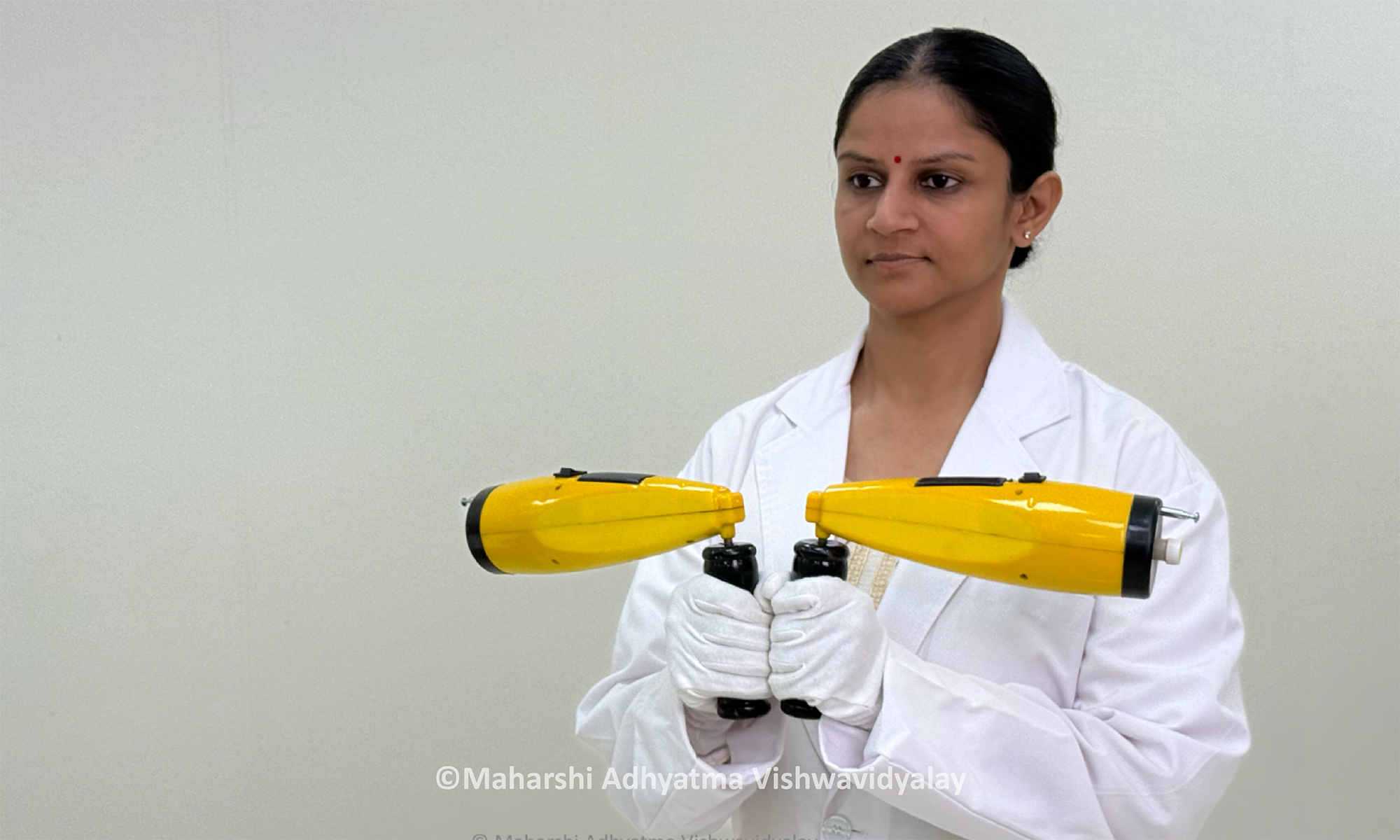
The research team used the Universal Aura Scanner (UAS), an instrument developed by Dr Mannem Murthy, a former nuclear scientist from India. Within the research framework adopted by MAV, the instrument is used to examine the subtle energy and aura associated with living and non-living objects.
Four principal readings are recorded:
| Reading | Description within the research framework |
|---|---|
| IR | Infrared – associated with negative subtle energy |
| UV | Ultraviolet – associated with a more intense form of negative subtle energy |
| PA | Positive Aura – associated with positive subtle energy |
| TMA | Total Measured Aura – the measured extent of the object's aura |
The readings are recorded as angles and distances in metres.
For the comparative analysis in this study, samples were classified as Positive, Negative, Both or Neutral, based on the IR and PA angle readings recorded in the original workbook.
A positive classification indicates that a positive aura was detected without a negative IR reading. A negative classification indicates a negative IR reading without a positive PA reading. Samples registering both were classified as Both, while those registering neither were classified as Neutral.
It is important to understand that these measurements represent MAV’s spiritual research methodology using the UAS Energy Hygiene Framework developed by Aura Research Foundation through 25 years of Research. They are not conventional laboratory measurements of soil chemistry, water contamination or established physical energy properties. The instrument is designed to measure the samples.
The most significant observation from the study emerged when the Indian samples were compared with those collected outside India.
The results were remarkably consistent across both soil and water.
A. Soil samples
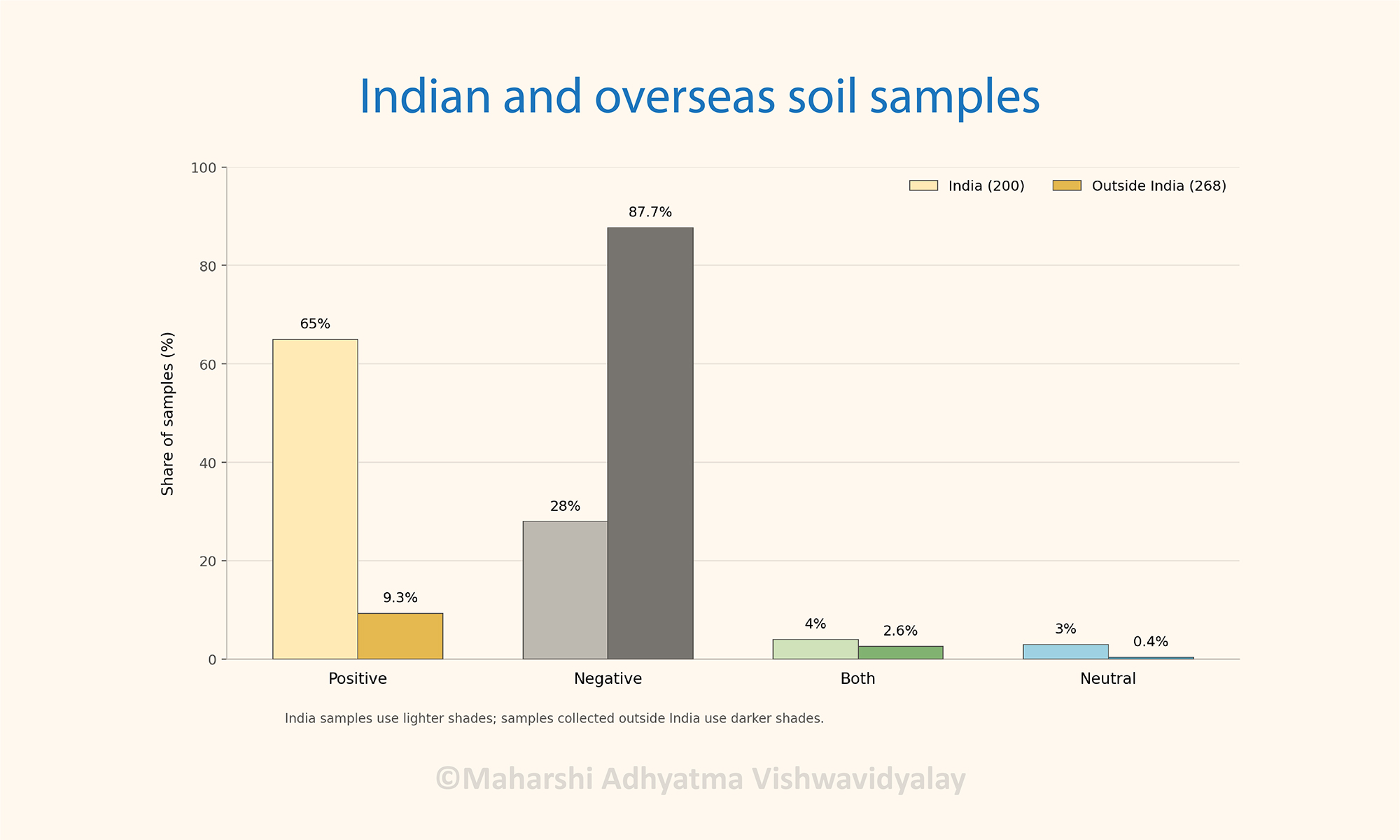
A total of 468 soil samples were analysed, comprising 200 samples from India and 268 from other countries.
The classification of these samples was as follows:
| Classification | India (200) | Outside India (268) |
|---|---|---|
| Positive | 65.0% | 9.3% |
| Negative | 28.0% | 87.7% |
| Both | 4.0% | 2.6% |
| Neutral | 3.0% | 0.4% |
The results are particularly striking.
Almost two-thirds of the Indian soil samples registered positive aura readings. In contrast, fewer than one in ten samples collected outside India registered positive readings.
Conversely, nearly 88% of overseas soil samples were classified as having a negative aura.
B. Water samples
The water study produced a remarkably similar pattern.
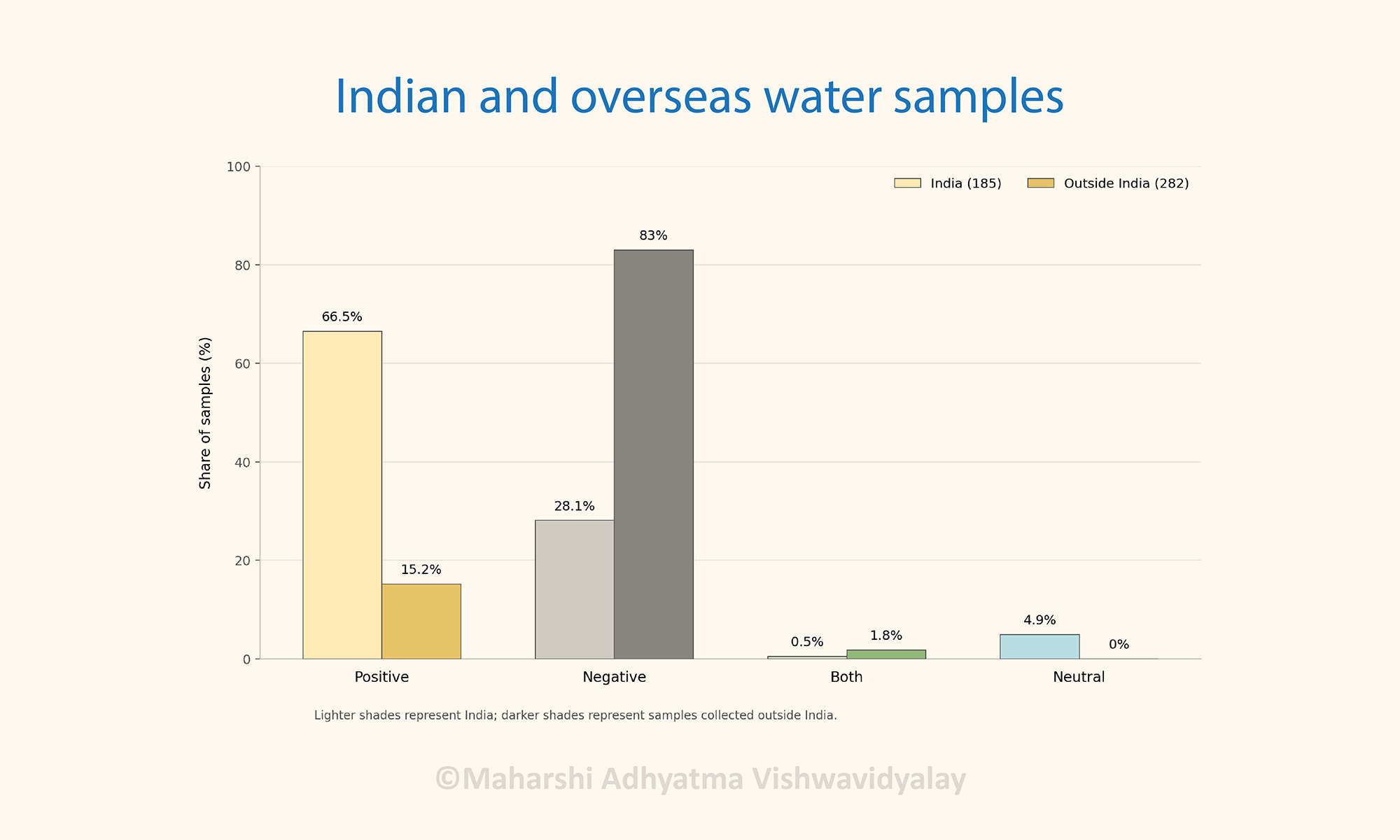
A total of 467 water samples were analysed, comprising 185 samples from India and 282 from other countries.
| Classification | India (185) | Outside India (282) |
|---|---|---|
| Positive | 66.5% | 15.2% |
| Negative | 28.1% | 83.0% |
| Both | 0.5% | 1.8% |
| Neutral | 4.9% | 0% |
Approximately two-thirds of the Indian water samples registered positive readings, compared with just over 15% of the samples collected outside India.
More than 83% of the overseas water samples registered negative readings.
C. What do these findings tell us?
The similarity between the soil and water findings is particularly interesting.
| Key observation | Soil | Water |
|---|---|---|
| Positive samples in India | 65.0% | 66.5% |
| Positive samples outside India | 9.3% | 15.2% |
| Negative samples in India | 28.0% | 28.1% |
| Negative samples outside India | 87.7% | 83.0% |
Across both categories, Indian samples demonstrated substantially greater positivity within the UAS classification framework.
This is an important finding because it challenges the assumption that a country’s apparent physical cleanliness or economic development necessarily corresponds to the subtle spiritual properties of its environment.
A developed country may have sophisticated sanitation systems, clean streets and advanced infrastructure. Yet, according to this research framework, these characteristics do not necessarily indicate a spiritually positive environment.
Equally, India faces considerable physical environmental challenges. The research does not suggest that India is free from pollution or environmental degradation.
Rather, it points towards a different dimension of environmental assessment that deserves further investigation.
The findings are based on the samples collected and should not be interpreted as a representative ranking of entire countries. Nevertheless, the consistent pattern across two different categories of natural resources makes the observations worthy of further study.
What could explain the difference observed between India and the other countries?
One possible avenue of exploration lies in India’s unique spiritual and cultural heritage.
For thousands of years, Indian civilisation has placed considerable importance on the relationship between human beings and nature.

Rivers have been revered as sacred. Mountains, trees and forests have been treated with respect. The five elements of nature have been recognised as fundamental to creation.
Spiritual practices, religious rituals, Sanskrit mantra chanting, meditation and the pursuit of spiritual progress up to God Realisation have remained integral to Indian society.
However, from the perspective of MAV’s spiritual research, another particularly important factor is India’s highest concentration of Saints and spiritually evolved individuals in the world.
The role of Saints in the environment
According to the spiritual research conducted at MAV, Saints and spiritually evolved individuals possess a high level of Sattva, or spiritual purity.
Their presence, spiritual practice and activities are considered to generate positive spiritual vibrations that can influence their surroundings.

India has historically been home to a large number of Saints, spiritual guides and individuals dedicated to spiritual practice.
Their contribution to society may therefore extend beyond the people they directly guide. From this spiritual perspective, they also contribute to the positivity and Sattvikta of the environment.
This provides an interesting hypothesis when considering the findings of the soil and water study.
Could the presence of spiritually evolved individuals and the continuation of spiritual traditions be among the factors contributing to the greater positivity observed in Indian samples?
This is a question that deserves more systematic research.
The three subtle basic components: Sattva, Raja and Tama
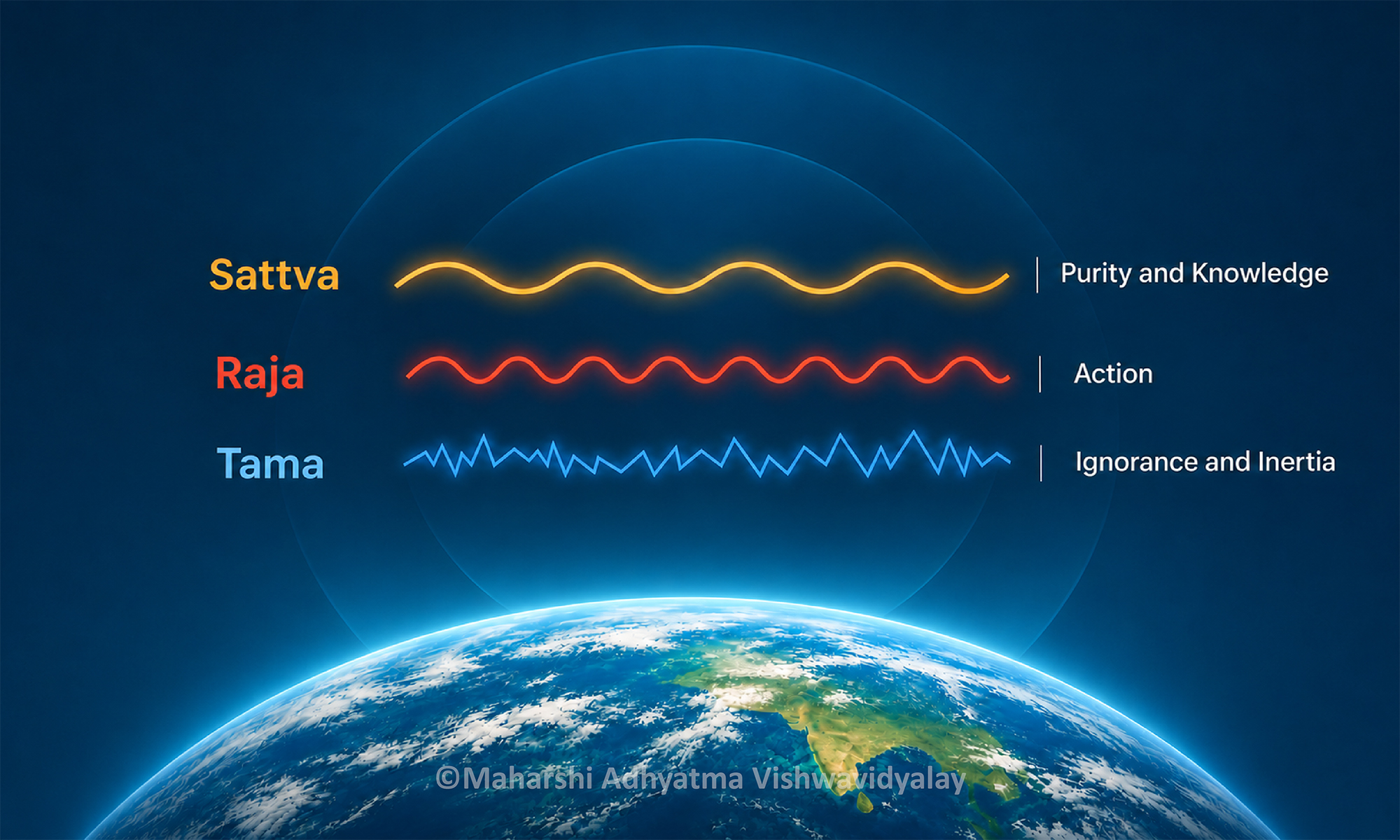
Indian spiritual philosophy describes three subtle basic components that are present throughout creation:
According to this philosophy, these three components are present in all living and non-living things, including the natural environment. The proportion and interaction of these components influence the subtle properties of an object or environment. An environment with a greater proportion of Sattva is considered spiritually purer and more conducive to spiritual growth. An environment dominated by Raja and Tama is considered more spiritually impure.
From this perspective, the quality of an environment cannot be determined solely by its physical appearance. Human thoughts, actions, behaviour and spiritual conduct are also considered relevant to its subtle properties.
This is an important distinction between conventional environmental assessment and the spiritual perspective being explored by Maharshi Adhyatma Vishwavidyalay.
The relationship between human conduct and environmental well-being is not a new idea in Indian civilisation.

One particularly relevant reference is found in the Janapadodhvansaniya Vimana, Chapter 3 of the Vimana Sthana of the Charaka Samhita, one of the foundational texts of Ayurveda.
The chapter discusses how environmental factors common to entire communities can become vitiated, leading to widespread disease and calamities.
It identifies four fundamental environmental factors:
| Sanskrit term | Meaning |
|---|---|
| Vayu | Air |
| Jal | Water |
| Desh | Land or geographical environment |
| Kaal | Time, season or prevailing era |
The text explains that when these factors become abnormal or impaired, they can contribute to widespread suffering and disease.
Importantly, the discussion does not restrict itself to physical environmental conditions. It also explores the role of human conduct, unrighteousness (Adharma) and intellectual errors (Prajnaparadha) in the deterioration of collective well-being.
In a broader philosophical sense, the Charaka Samhita connects the conduct of individuals and communities to the health of their environment.
This presents a profound perspective.
Environmental well-being is not simply a matter of managing natural resources. It is also connected to the quality of human behaviour and the values that guide society.
The Charaka Samhita therefore offers an important foundation for exploring the relationship between individual responsibility, collective consciousness and environmental sustainability.
It is not a modern scientific explanation of climate change, but it provides a valuable philosophical framework for considering environmental responsibility more holistically.
The balance of the three Gunas and the five cosmic principles
Within the framework of Indian Knowledge Systems, the balance of the 3 Subtle component (3 Gunas) Sattva, Raja, and Tama is understood to influence not only the individual but also the natural environment.
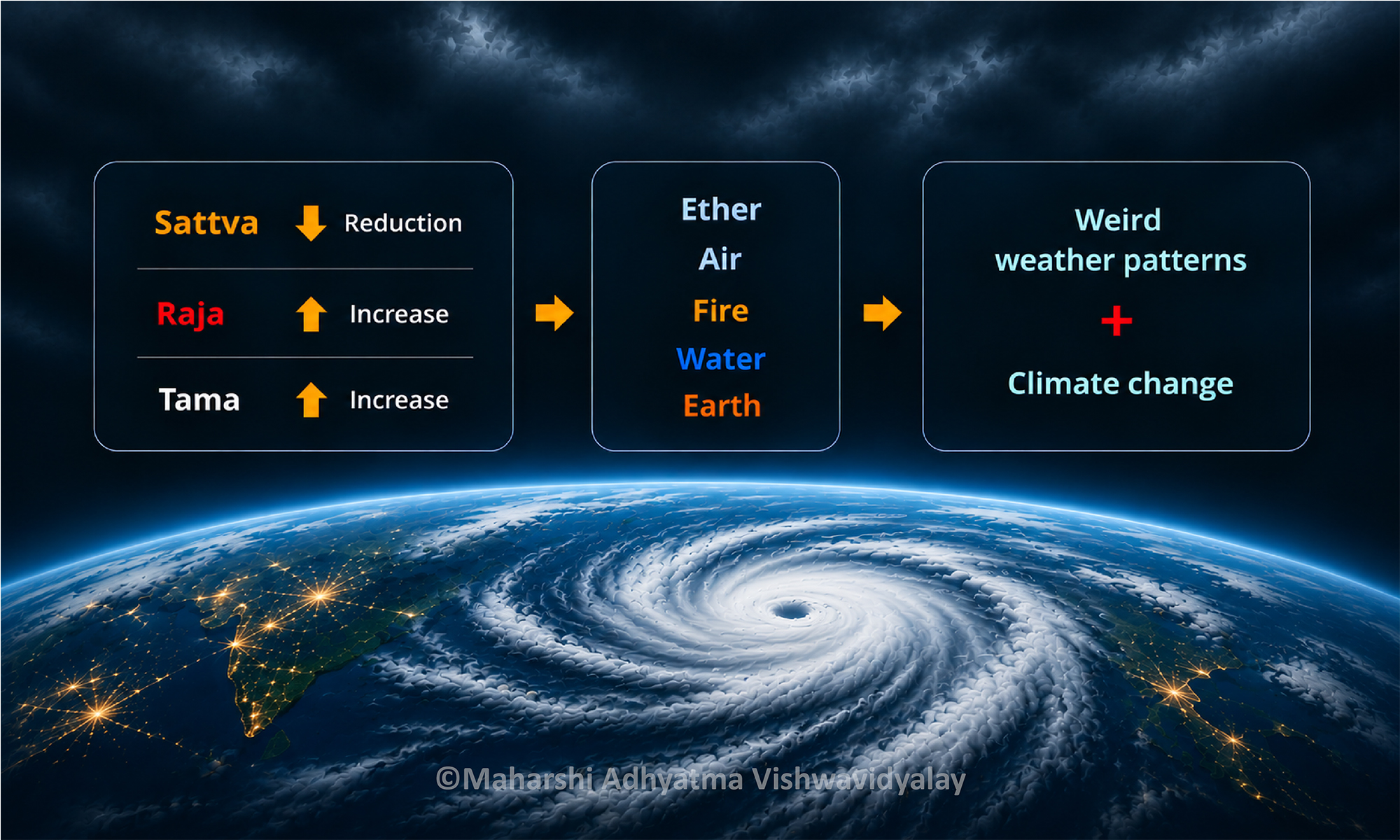
When Sattva – the principle of purity and knowledge – decreases in proportion, while Raja (action) and Tama (ignorance and inertia) become increasingly dominant, this imbalance is believed to affect the functioning of the five cosmic principles: Ether, Air, Fire, Water and Earth. These five principles are regarded as nature’s fundamental building blocks.
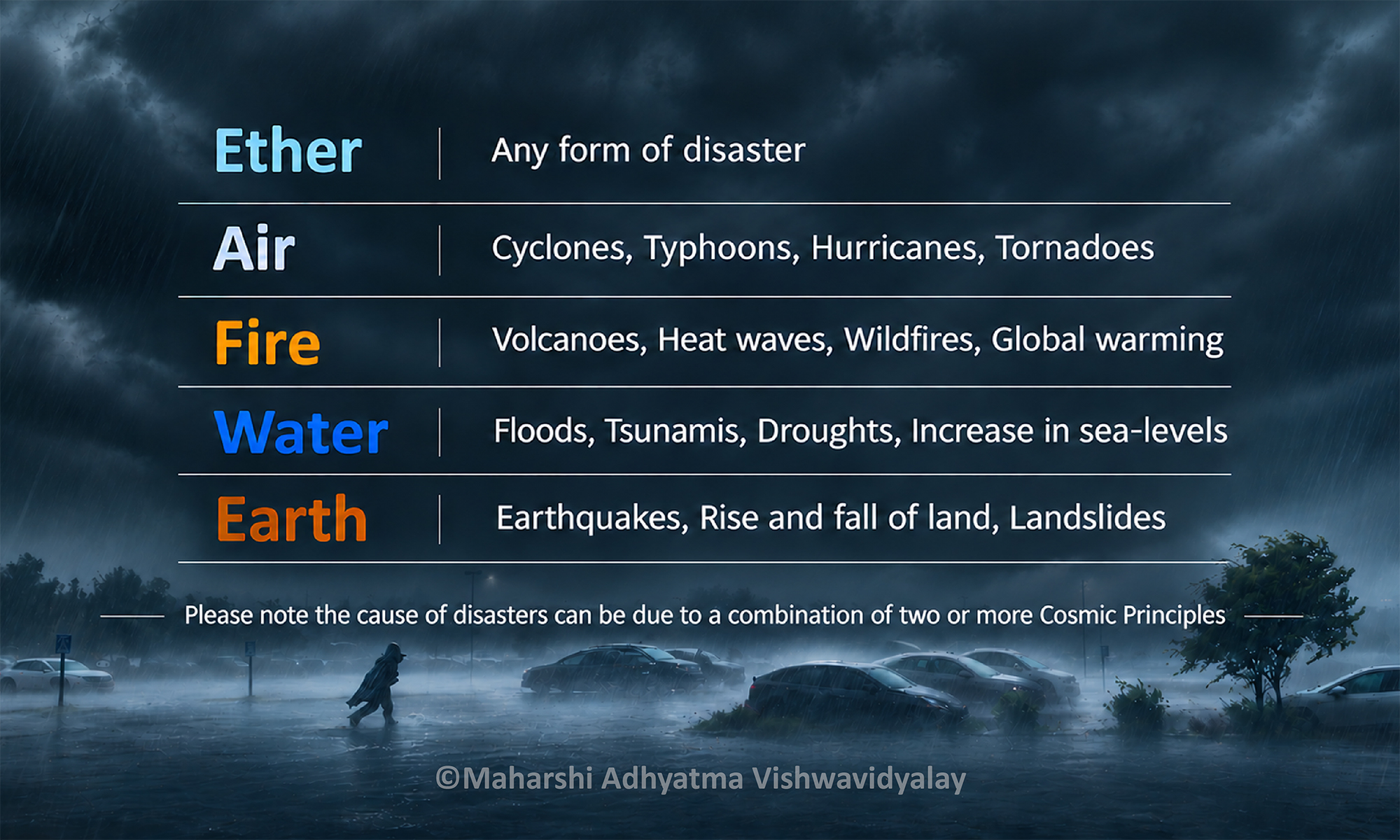
According to MAV’s spiritual research perspective, an imbalance in their functioning may manifest as disturbances in natural phenomena and unusual weather patterns. For example,
This perspective suggests that environmental well-being is connected not only with the physical management of natural resources but also with maintaining a balance in the subtle components of nature. Human beings have a particularly important role in this regard, as their thoughts, actions, conduct and collective way of life are understood to influence the balance of Sattva, Raja and Tama in the environment.
One of the important insights emerging from MAV’s research is that physical pollution and spiritual impurity are not necessarily the same thing.
A physically clean location may still register negative readings within the UAS research framework. Conversely, a location that does not appear particularly clean or pristine may register positive readings.
This distinction invites us to reconsider what we mean by environmental purity.
Consider water as an example.
Conventional water-quality assessments examine parameters such as pH, dissolved oxygen, microbial contamination, heavy metals and chemical pollutants. These measurements are essential for determining whether water is safe for human consumption and ecological health.
However, the spiritual perspective explored by MAV asks an additional question:
Does water also possess subtle properties that cannot be understood through its conventional physical and chemical characteristics?
Similarly, soil is generally assessed through its nutrient content, organic matter, mineral composition, contamination and ability to support plant growth.
MAV’s research proposes that soil also has a subtle dimension that merits investigation.
This does not diminish the importance of conventional environmental science. Rather, it suggests an additional area of enquiry.
The objective should be to develop a more comprehensive understanding of the environment by examining both its established physical properties and the subtle properties explored through spiritual research.
The world has made considerable progress in developing mechanisms to recognise and incentivise environmentally responsible behaviour.
Carbon credits are one such mechanism. They provide an economic framework for recognising activities that reduce, remove or avoid greenhouse gas emissions.
Similar discussions are now taking place around biodiversity credits, water credits and other mechanisms intended to encourage environmental protection.
These are important developments.
However, if the quality of human conduct and the spiritual purity of the environment also matter, should we consider another dimension?
Could we introduce the concept of Sattvik Credits?
The idea is to recognise and encourage activities that contribute to greater spiritual purity in individuals, communities and the environment.
Unlike carbon credits, which are based on established greenhouse gas accounting methodologies, Sattvik Credits would be a new concept requiring substantial research, discussion and the development of appropriate assessment criteria.
Some areas worth exploring include:
The concept would need to be developed carefully to ensure that it is meaningful, transparent and not merely another commercial certification.
The underlying principle, however, is worth considering.
Carbon credits recognise the importance of reducing the harm we cause to the environment.
Sattvik Credits would seek to recognise the positive contribution we make towards the spiritual well-being of the environment.
Could environmental sustainability eventually encompass both? As per Indian Knowledge Systems, both are important.
The same principle can be extended to businesses and organisations.
Corporate Social Responsibility has evolved considerably over the years. Organisations are increasingly expected to consider their environmental footprint, ethical labour practices, philanthropy and contribution to society.
However, there is another dimension that is rarely considered: the spiritual impact of the products and services that organisations create and promote.
MAV’s research into the subtle effects of clothing, music and other everyday products suggests that our choices may have consequences beyond their physical or emotional effects.
For example, research conducted by MAV has examined how different garments and colours can affect the subtle readings associated with an individual.
Similarly, experiments involving different genres of music have explored their effects on an individual’s aura.
One particularly interesting experiment compared heavy metal, relaxing music, Indian classical music and devotional music.
Within the research framework, the results differed across the four categories. The devotional performance of a Saint was found to have a more positive effect on the subject than the other musical examples examined.
These findings raise important questions for businesses.
If products and services can have subtle effects on people, should organisations consider these effects when designing, producing and marketing them?
A company may manufacture a product using environmentally sustainable materials, ensure ethical labour practices and make a positive social contribution. Yet, according to the spiritual perspective explored by MAV, the product could still have a detrimental subtle effect on its users.
This suggests that Corporate Social Responsibility could evolve further.
We could call this broader concept Corporate Spiritual Responsibility.
It would encourage organisations to consider not only the physical and social consequences of their activities but also their potential spiritual impact on individuals and society.
Such a perspective could influence industries as diverse as fashion, entertainment, music, food, architecture, media and consumer products.
Ultimately, the objective would be to encourage organisations to contribute not only to a cleaner physical environment but also to a more positive and spiritually conducive society.
If the spiritual dimension is relevant to environmental well-being, then responsibility cannot rest solely with governments and corporations.
It begins with individuals.
According to the spiritual principles explored by MAV, increasing Sattva involves reducing negative tendencies and cultivating qualities such as humility, compassion, honesty, self-discipline and concern for the well-being of others.
Some of the practices that can contribute to this include:
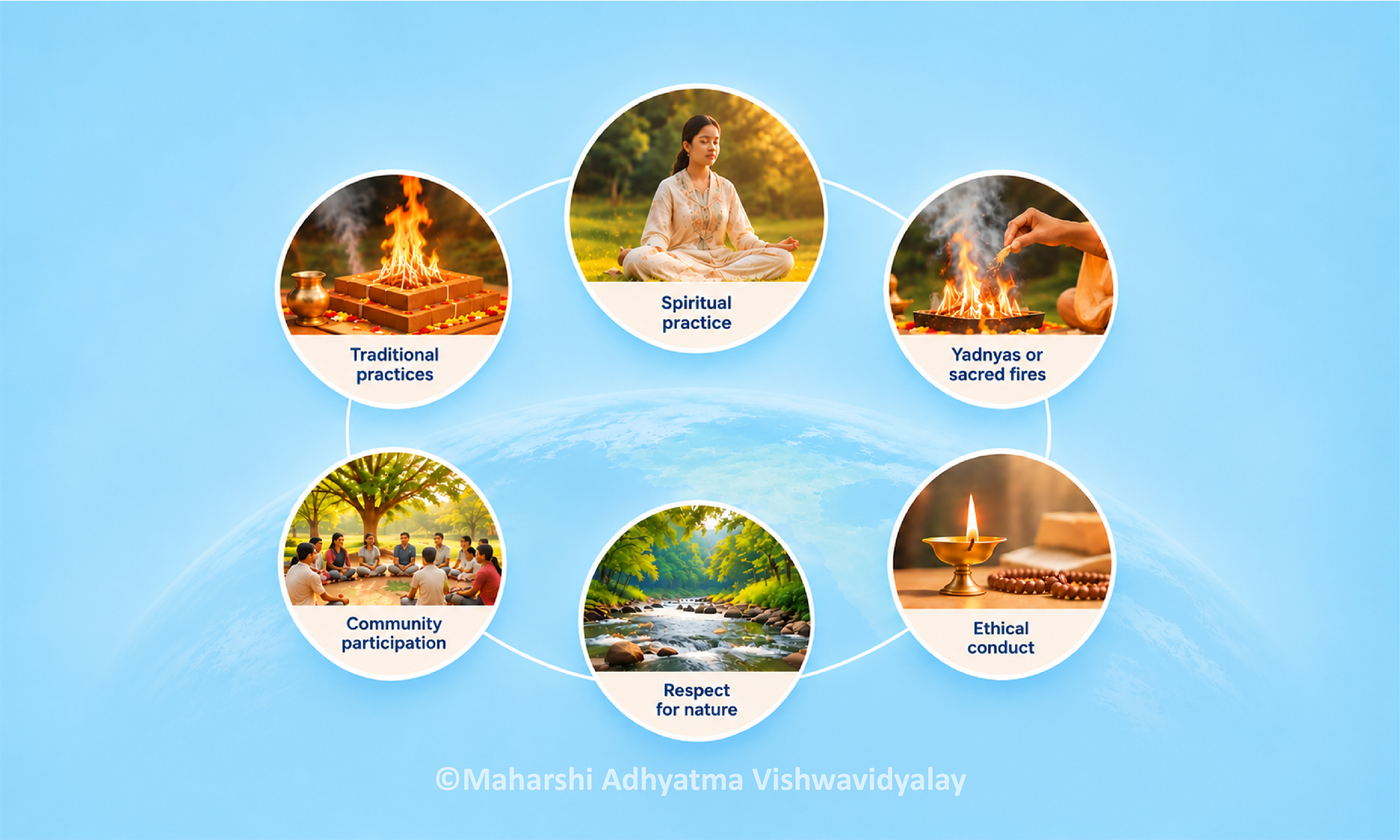
MAV’s position is that spiritual practice, when undertaken according to universal spiritual principles and under appropriate guidance, can help individuals increase spiritual purity and make progressively more Sattvik choices.
This is not a substitute for reducing emissions, protecting forests, improving sanitation or conserving water. These responsibilities remain essential.
Rather, it encourages us to consider whether environmental protection should also involve transforming the attitudes and consciousness of the people who inhabit the planet.
The global study of 935 soil and water samples presents an interesting and consistent observation.
Within the UAS research framework, samples collected in India demonstrated substantially higher positive readings than those collected outside India.
The findings raise important questions about the relationship between human activity, spiritual traditions, collective consciousness and the subtle properties of the natural environment.
India’s spiritual heritage, the presence of Saints and the continuation of spiritual practices offer possible avenues for understanding these observations.
The Charaka Samhita guides and reminds us that the well-being of communities is connected to the condition of their environment and the quality of human conduct.
Modern environmental science has rightly established the importance of reducing greenhouse gas emissions, conserving biodiversity and protecting natural resources. The IPCC has unequivocally established that human activities have caused global warming.
There is no reason why this work should not continue alongside an exploration of additional dimensions of environmental well-being.
Perhaps the next evolution in sustainability will involve looking beyond the physical environment and considering the subtle influence of human consciousness.
We have learnt to measure carbon emissions. We have developed mechanisms to recognise biodiversity conservation. We have begun holding corporations accountable for their social and environmental impact.
Could it now be time to explore how we measure and encourage the spiritual purity of our environment?
Perhaps the future of environmental sustainability will require not only reducing what we take away from nature, but also increasing the positivity we contribute to it.
Beyond Carbon Credits, could Sattvik Credits become part of a new conversation about our collective responsibility towards the planet?
MAV invites researchers, universities, environmental organisations, policymakers and institutions around the world to explore this question through further research and dialogue.
The challenge before humanity is not merely to build a more sustainable world. It is to create a world in which human beings, society and nature can flourish together.
This study was undertaken by the Maharshi Adhyatma Vishwavidyalay (MAV), also known as the Maharshi University of Spirituality, in collaboration with the Spiritual Science Research Foundation (SSRF).
The research examined 468 soil samples and 467 water samples collected from India and other countries. The analysis presented in this article is based on the original sample records and classification formulas in the research workbook.
The Universal Aura Scanner readings and their interpretation form part of MAV’s spiritual research methodology. The findings should be understood within this framework and do not constitute conventional scientific measurements of environmental quality. Further independent research and validation would be valuable.
1. A Spiritual Study of Soil – Part 1
2. A Spiritual Study of Soil – Part 2
3. Study and Analysis of Water and Its Subtle Properties
4. Sattva, Raja and Tama – The Three Subtle Basic Components
5. Janapadodhvansaniya Vimana – Charaka Samhita
6. IPCC Sixth Assessment Report – Synthesis Report
About MAV: The Maharshi Adhyatma Vishwavidyalay is dedicated to spiritual research, education and the application of Indian spiritual knowledge for the well-being and spiritual progress of humanity.
Website: https://www.spiritual.university/