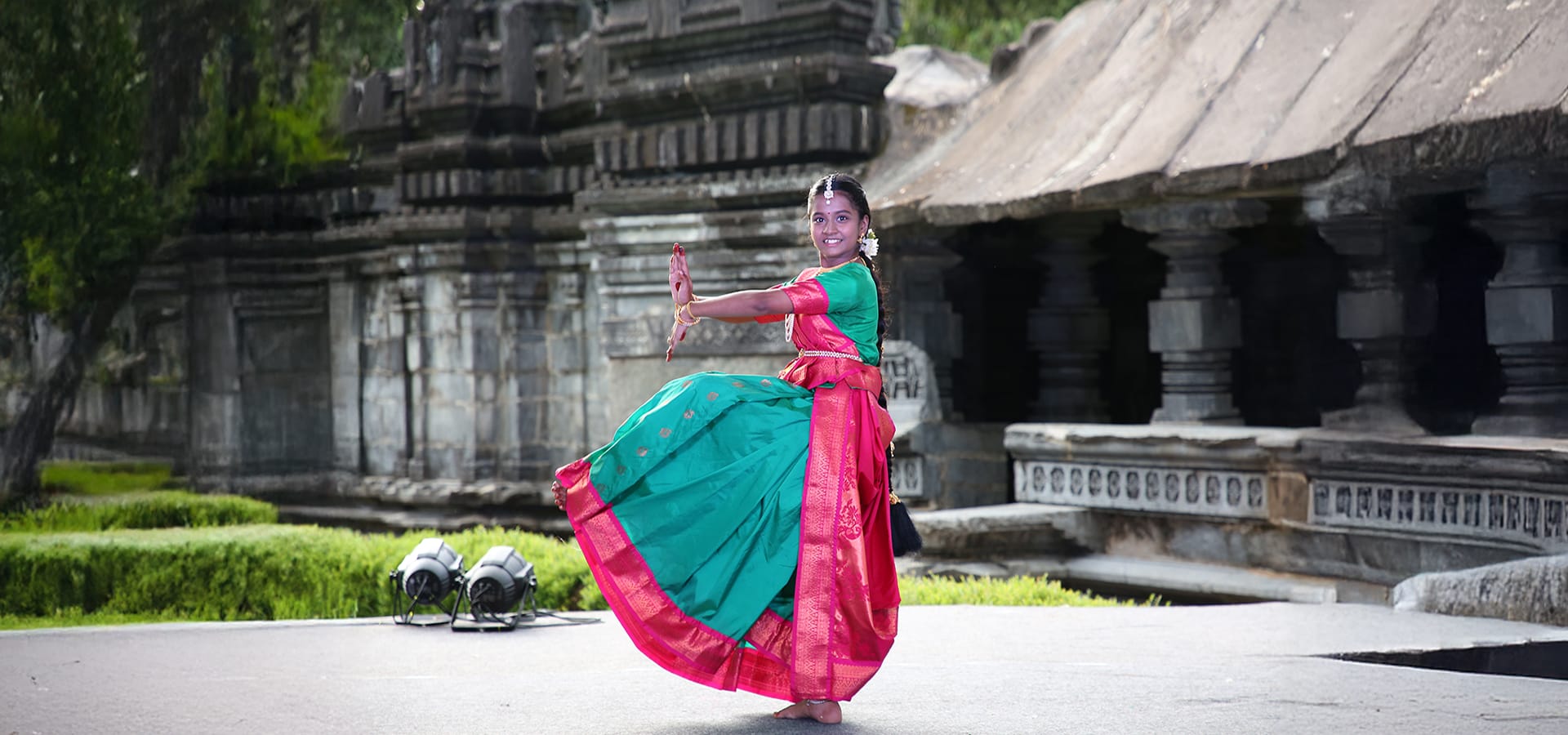

Indian classical music and dance originated in temples in India. This is because the main objective of Indian classical music and dance was to create a medium for performers to worship God or the Deity of the temple through their art form. The spiritual purity inherently present in the temples had a positive effect on the performer, and this spiritually elevated his or her performance. The research team at Maharshi Adhyatma Vishwavidyalay (also known as Maharshi University of Spirituality) conducted a research study to understand how the spiritual purity or negativity present in a venue can affect a music or dance performance.
To investigate how venue affects the spiritual and energetic qualities of dance, the research team conducted field experiments using instruments such as the Universal Aura Scanner (UAS) to measure changes in subtle energy (aura) surrounding dancers and ritual objects before and after performances. Two dancers performed identical devotional pieces — one in a temple space and one in a secular concert hall — with rigorous aura measurements taken at each location. By comparing aura data across venues, the study assessed the degree to which environments influenced the positivity or negativity of spiritual vibrations emitted during dance performance.
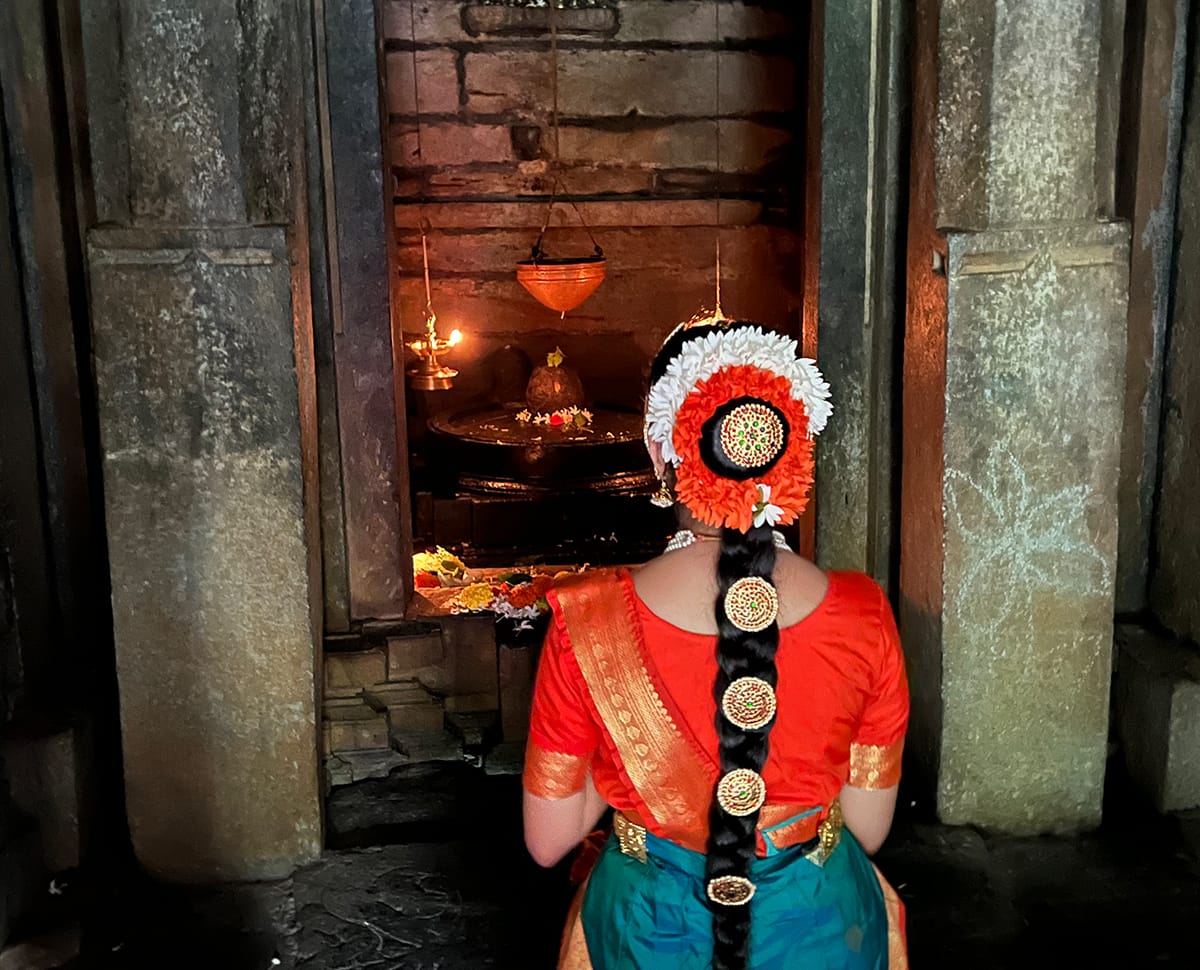
Enhanced Positivity in Sacred Spaces: Dance performed within a temple resulted in a measurable increase in positive aura levels for both the dancer and surrounding spiritual objects, indicating that the temple’s inherent spiritual purity amplified the devotional energy of the performance. Conversely, in the concert hall, positive aura levels either stagnated or declined, revealing a dampening effect on spiritual energy.
Experiential Differences Reported by Dancers: Dancers reported subjective spiritual experiences that aligned with the aura data. In temples, performers sensed a direct divine presence and felt spiritually uplifted, whereas in secular venues they felt emotional pressure, spiritual disconnection, or heaviness, despite executing the same choreography.
Venue Determines Impact on Audience and Environment: The study also found that when dance is performed in spiritually pure places like temples (or well-maintained ashrams), not only do performers benefit, but audiences also absorb positive vibrations. In contrast, secular venues with little to no inherent positivity can impart negative subtle effects that persist beyond the performance.

Indian temples served as the original crucibles for classical dance, shaping its spiritual purpose and energetic impact. Modern venues, lacking such spiritual purity, do not facilitate the same devotional elevation in dance performance.