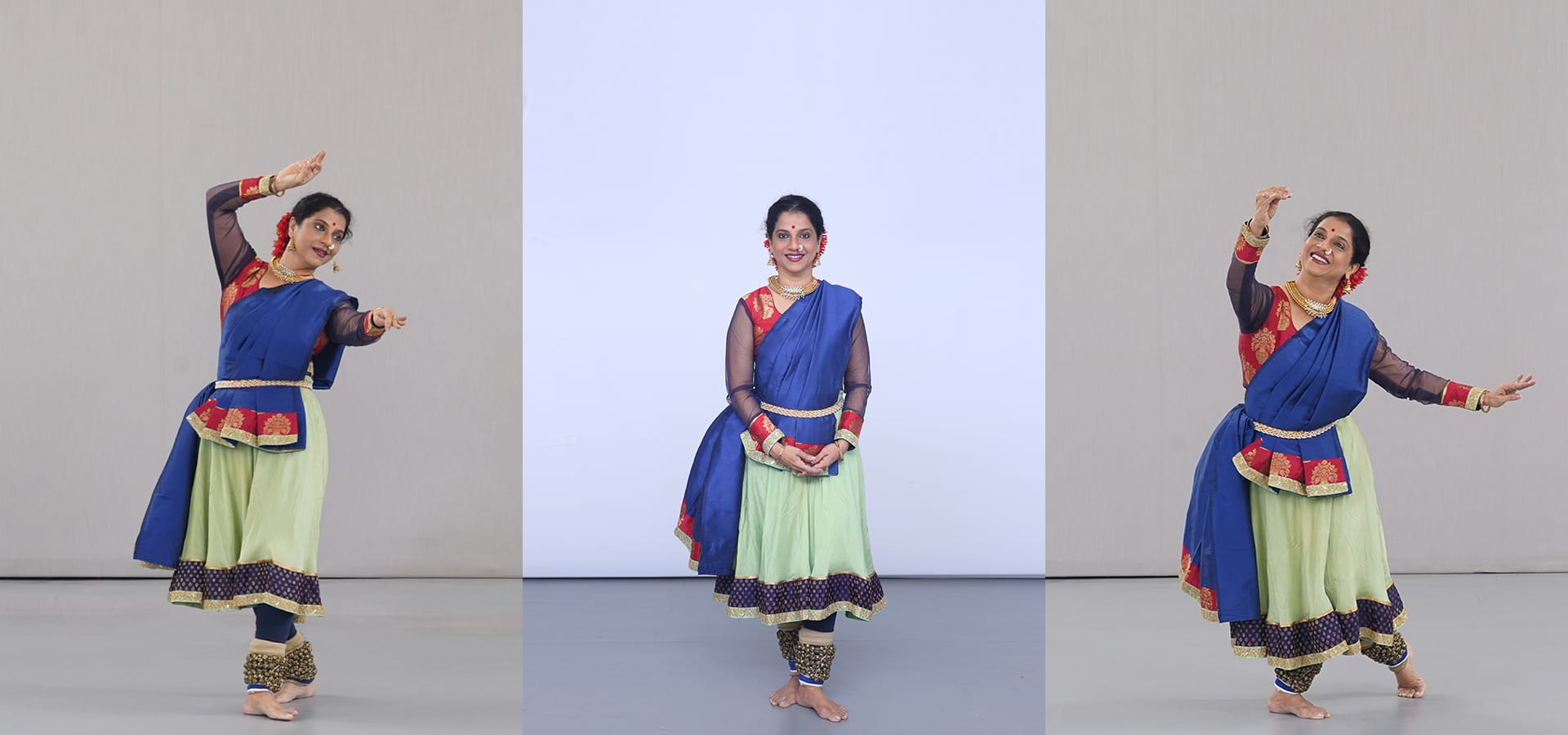

In January 2022, when Shrimati Sonia Parchure stepped into the Spiritual Research Center and Ashram of the Maharshi Adhyatma Vishwavidyalay (MAV), little did the research team know that her visit would turn into an extraordinary opportunity to study the influence of spiritually pure atmosphere of the Ashram on an external classical dancer and her performance.
Shrimati. Soniya Atul Parchure, a celebrated Kathak (Indian Classical dance form) exponent from Maharashtra, has spent more than four decades immersed in her art. A disciple of the renowned ‘Talyogi’ Pt. Suresh Talwalkar of Pune and a holder of the prestigious ‘Alankar’ degree, she has performed widely—solo, commercial plays, film choreography—and today serves as a panelist as well on the ‘Indian Council for Cultural Relations (ICCR)’, New Delhi.
During her stay at MAV, she generously offered her art for research for the benefit of society, and what followed over the next two days was a fascinating exploration of how a spiritually positively charged environment influenced Indian classical dance performed with devotion.
The spiritual research team designed five experiments to observe how the positivity of the Ashram influenced Shrimati. Parchure, her dance, her costume—and even the audience. At every stage, the Universal Aura Scanner (UAS) was used to measure the respective auras.
In the first experiment, the dancer performed Vandana (Salutation) in Pancham Swari taal (rhythmic cycle) in the studio of MAV. Her aura was measured at multiple points—on entering the Ashram initially, after wearing her costume and makeup (before the performance), and finally, after the performance. The auras of the audience and ghunghroos (bells) were also measured before and after the dance.
In the next experiment, she enacted the delicate emotions of a ‘heartbroken lover (khandit nayika)’ through kathak. Again, the auras of the dancer and the viewers were studied before and after the presentation.
In the third experiment, Shrimati. Parchure danced intuitively to the chant ‘Jai Jai Ram Krushna Hari’, and her aura was measured before and after to study the effects of this spontaneous, devotional expression.
On the following day, the base auras of the dancer, viewing seekers, ghungroos, dancer’s costume along with the tabla were measured before the start of the fourth experiment. The dancer performed the Tatkaar form of Kathak in treetal laykari (rhythm). The aura readings were repeated after the performance.
In the final experiment, the dancer performed two compositions of Kathak and her aura was measured with the focus again on how it changed before and after the performance.
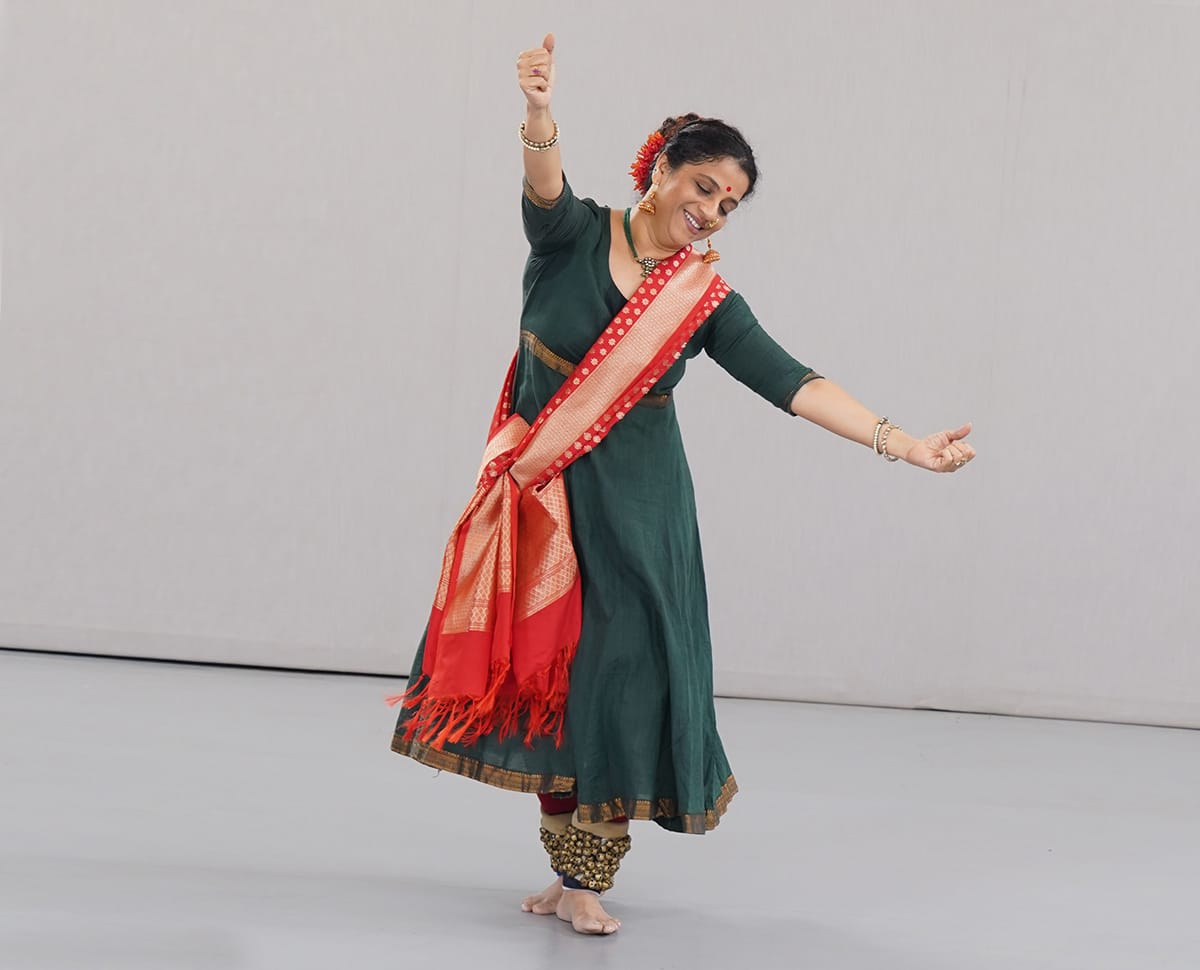
What unfolded during the study was quite remarkable. Research findings showed that Shrimati. Parchure entered the Ashram with a positive aura of 2.6 m. After wearing her costume and makeup after an hour, it increased to 4.5m. Over the next three days, her base aura kept rising—eventually reaching over 15m, a stunning 240% increase. This was due to the spiritually pure atmosphere of the Ashram, along with her own devotion and bhav.
Another finding was that after each dance performance by Shrimati Sonia, the positivity in her aura increased significantly. After the first and second performances, her aura’s positivity increased by 78% and 113%, respectively—even though she had arrived less than 24 hours earlier. Eventually, her aura exceeded the measurable space of 22.5m, making further readings impossible. After the final performance, she experienced a deep spiritual emotion (bhav-jagruti). This was due to her devotion, bhav and the spiritually pure atmosphere of the Ashram that helped her to connect with the Divine more deeply.
Now interestingly, the viewers’ auras also became increasingly positive each time, and by the end of the fourth experiment, the average increase was 155% and the maximum was over 200%; additionally, their negative auras reduced up to 80%, with average being 60% demonstrating how powerfully the combination of their bhav, the performer’s bhav, and the spiritually positive Kathak performed in a sattvik (spiritually pure) atmosphere of the ashram influenced them.
Now, the most interesting finding was that even the inanimate objects like the ghungroos, tabla and costume showed surges in positivity after each performance. In fact, by the end of the last performance, the auras of ghunghroos, costume and tabla were 227%, 319% and 300% higher than before. This highlighted the impact of bhav and Divine Consciousness (Chaitanya) in the environment along with the inherent sattvikta of Kathak.
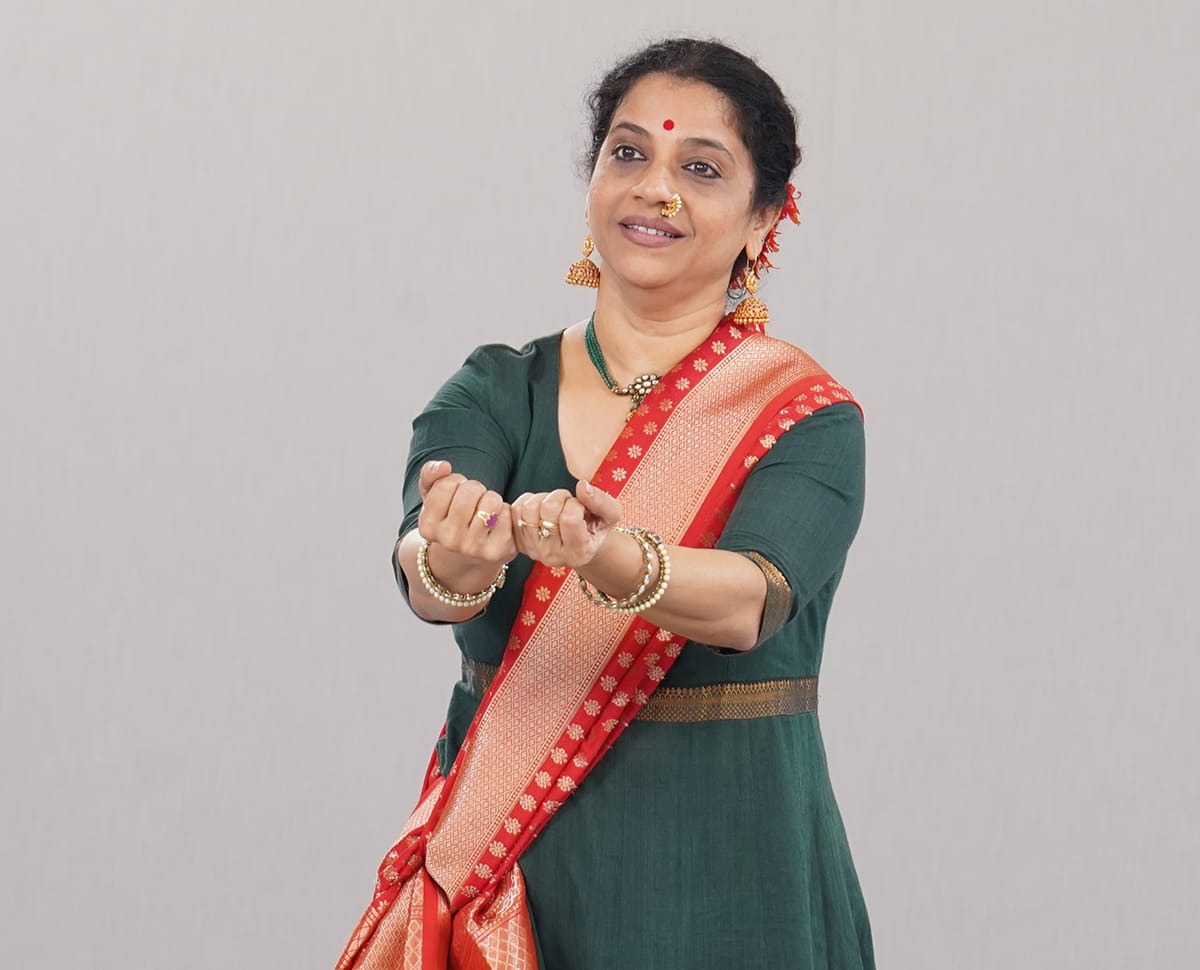
This study signifies that practicing Indian classical arts—in this case, Kathak—within a spiritually pure environment can enhance the inherent positive aura and subtle energy of the artist and provide momentum to an artist’s spiritual practice. Notably, these effects were observed not only in residents of the Ashram but also in visiting performers. During her stay, Shrimati. Soniya Parchure’s exposure to the Ashram’s sattvik food, lifestyle, environment, and her bhav toward ‘Paratpar Guru Dr Athavale’, the Saint and founder of MAV, consistently enhanced her baseline positive aura.
The findings also suggest that when an artist approaches her art with devotion, the resulting performance generates spiritually pure vibrations that positively influence the surroundings as well as the artist’s own subtle energy and aura. Since Shrimati. Soniya Parchure’s presentations were accompanied with intense bhav, right expressions as per the composition and complete immersion into the art, a large amount of positive vibrations were emitted from her dance.
Overall, the study underscores that the Indian classical dance form, Kathak, is a very pure art form which can serve as a medium to connect with the Divine. When practiced with devotion in a spiritually supportive environment, it allows the artist to unravel its true essence and experience spiritual growth.