

Music is deeply personal. We turn to different genres depending on whether we want to feel calm, energised, reflective, or joyful. But beyond emotion, the music we listen to also influences us at a subtle spiritual level. MAV’s research shows that music can affect the aura, and that factors such as the genre, intention behind the music and the spiritual level of the artist all play a significant role.
For the past five years, MAV has had the privilege of collaborating with Pradeep Chitnis, a classical singer at the 61% spiritual level. His elevated spiritual state offered a unique opportunity to study how music changes in its spiritual effect depending on what a spiritually evolved singer performs.
Mr. Chitnis, from Thane, Maharashtra, is a disciple of Pandit Rajaram Shukla and sings in the Gosai tradition. He has a prestigious ‘Alankar’ degree in Music. He also holds a Diploma in Music Therapy from Balaji University and Mahatma Gandhi Medical College and Research Center, Pondicherry. Alongside performing widely, he teaches numerous students through Kamal Sangeet Vidyalaya.
Two experiments were carried out.
Experiment 1: Mr. Chitnis sang Bollywood songs for 45 minutes before an audience of seekers with spiritual distress, along with plants such as Rose, Alocasia (african mask) and Lady Palm (Rhapis Palm) were placed at the venue. Aura readings of both the seekers and the plants were taken before and after using the Universal Aura Scanner (UAS). He then sang devotional songs for 59 minutes for the same group, and readings were again taken before and after.
Experiment 2: The following day, a second experiment was conducted with seekers without spiritual distress and the same plants. Mr. Chitnis sang Bollywood songs for 43 minutes, followed by devotional songs for 70 minutes. UAS readings were taken before and after each performance for both the audience and the plants.
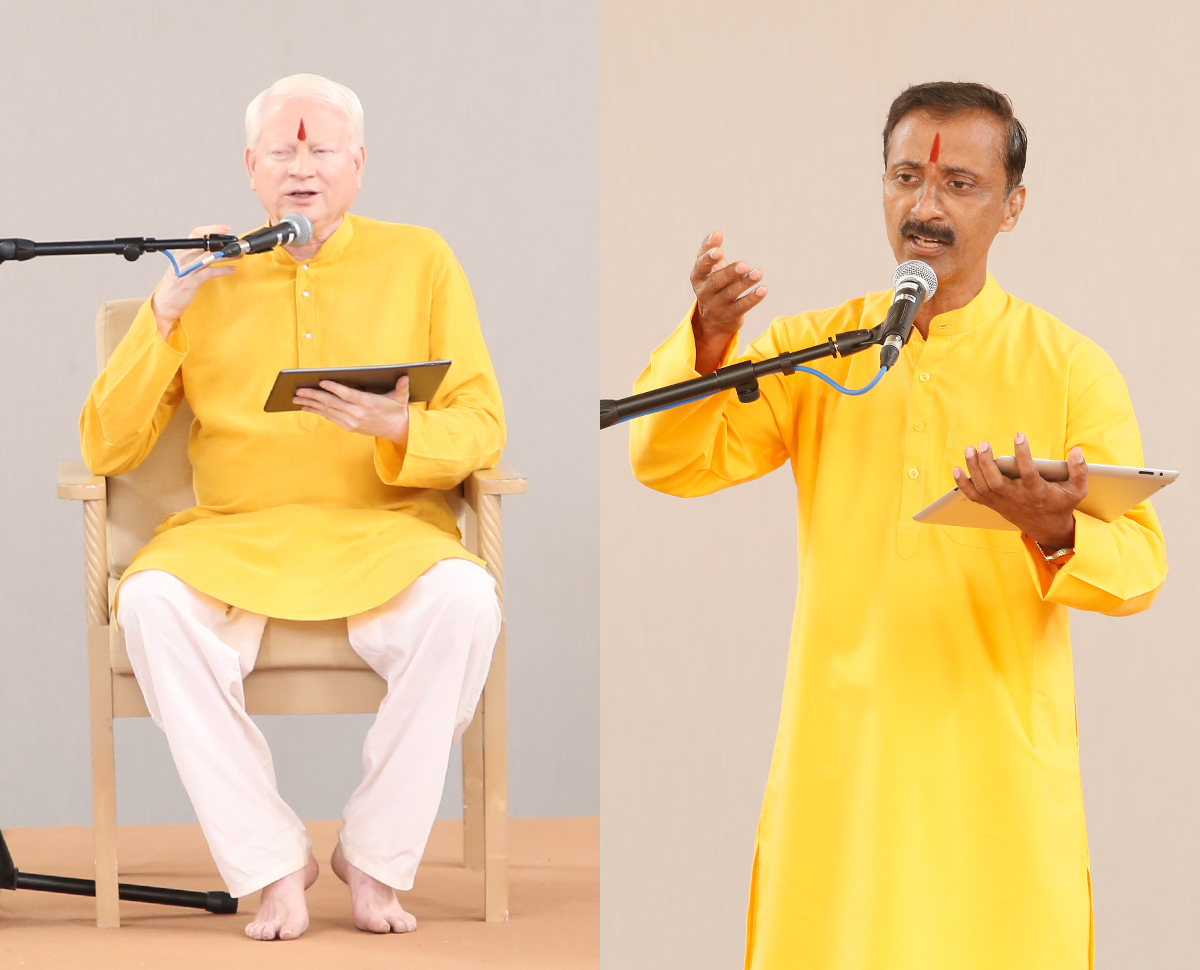
Due to Mr. Chitnis’ high spiritual level, both genres of music generated a positive spiritual impact on him, the audience, and even the plants. However, devotional songs produced significantly stronger spiritual benefits.
For instance, among the distressed seekers:
The positive aura told a similar story:
Comparable patterns were observed for Mr. Chitnis himself and the plants in both experiments.
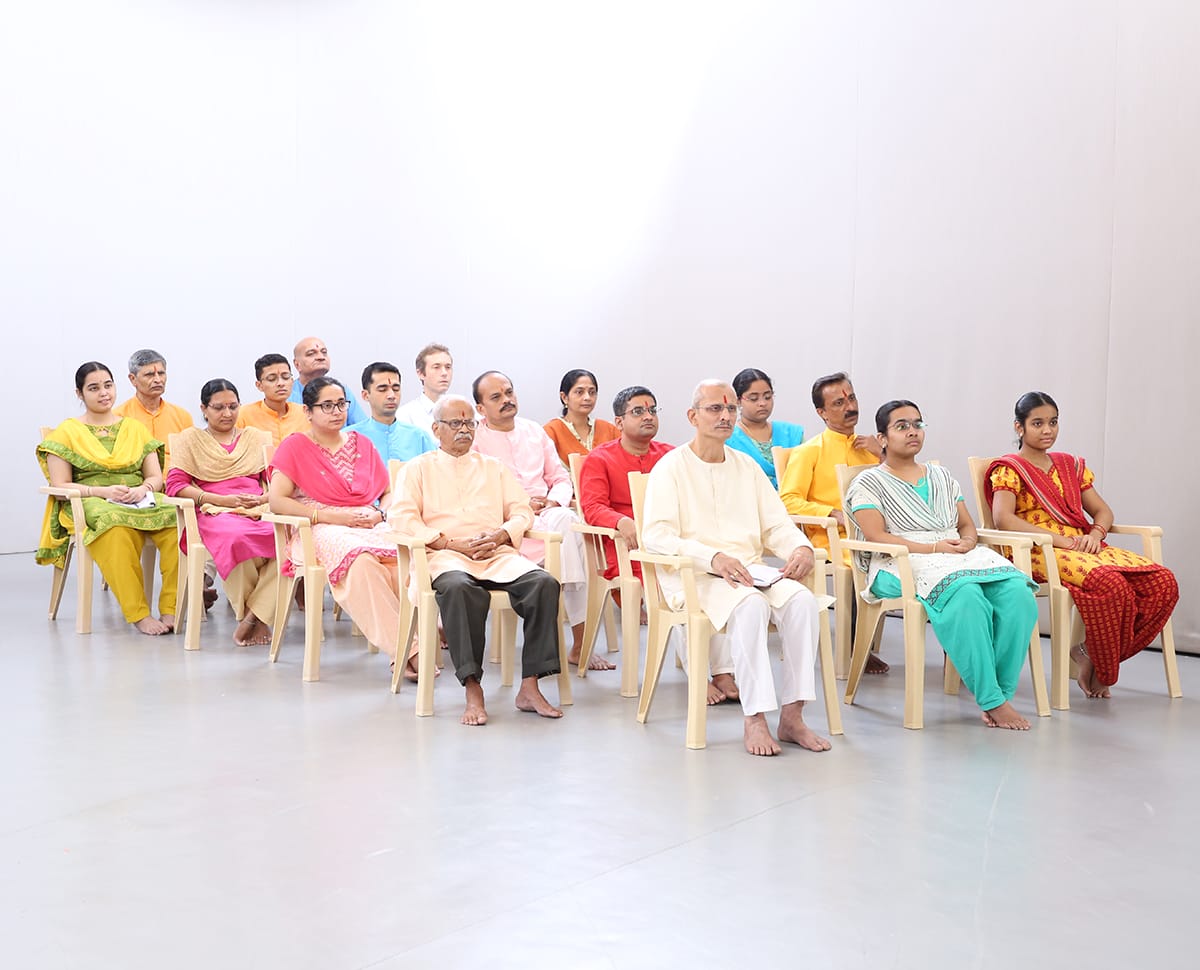
These findings highlight the powerful influence of an artist’s spiritual level: because of Mr. Chitnis’ high spiritual state, both Bollywood and devotional songs had an uplifting effect on everyone present, even the plants. At the same time, the markedly greater benefit of devotional songs reinforces a key insight from MAV’s research: the purpose and intent behind an artform deeply shape its spiritual impact.
When music is offered with devotion and the aim of God-realisation, its capacity to uplift becomes significantly stronger, something beautifully reflected in these experiments.